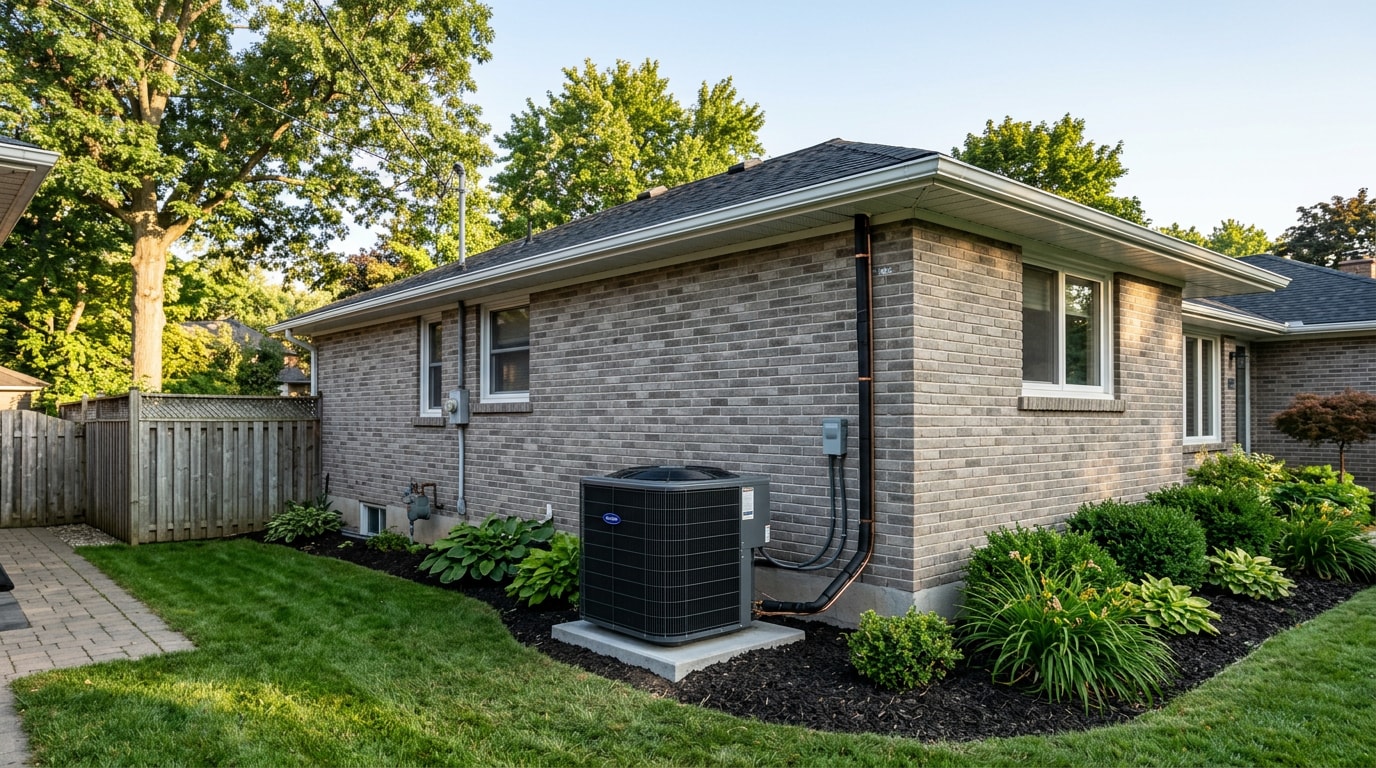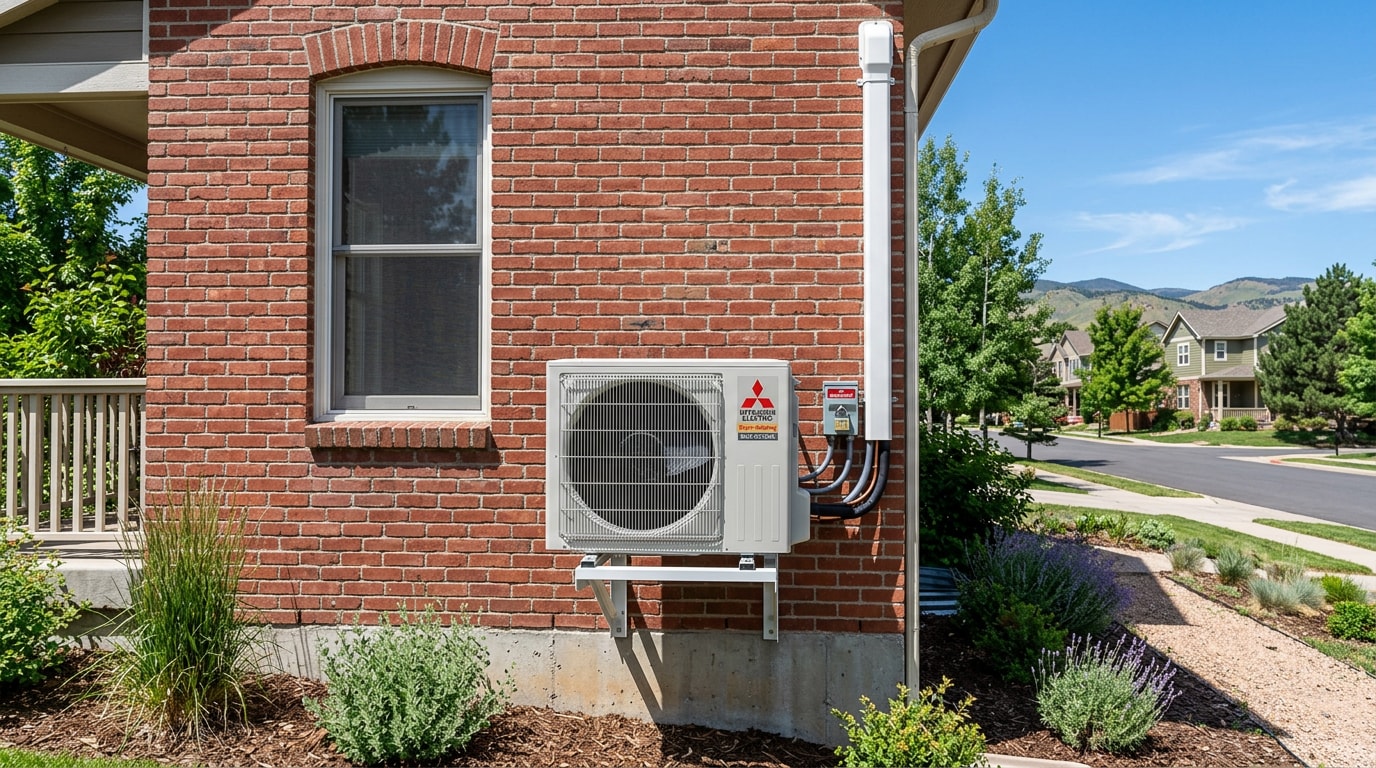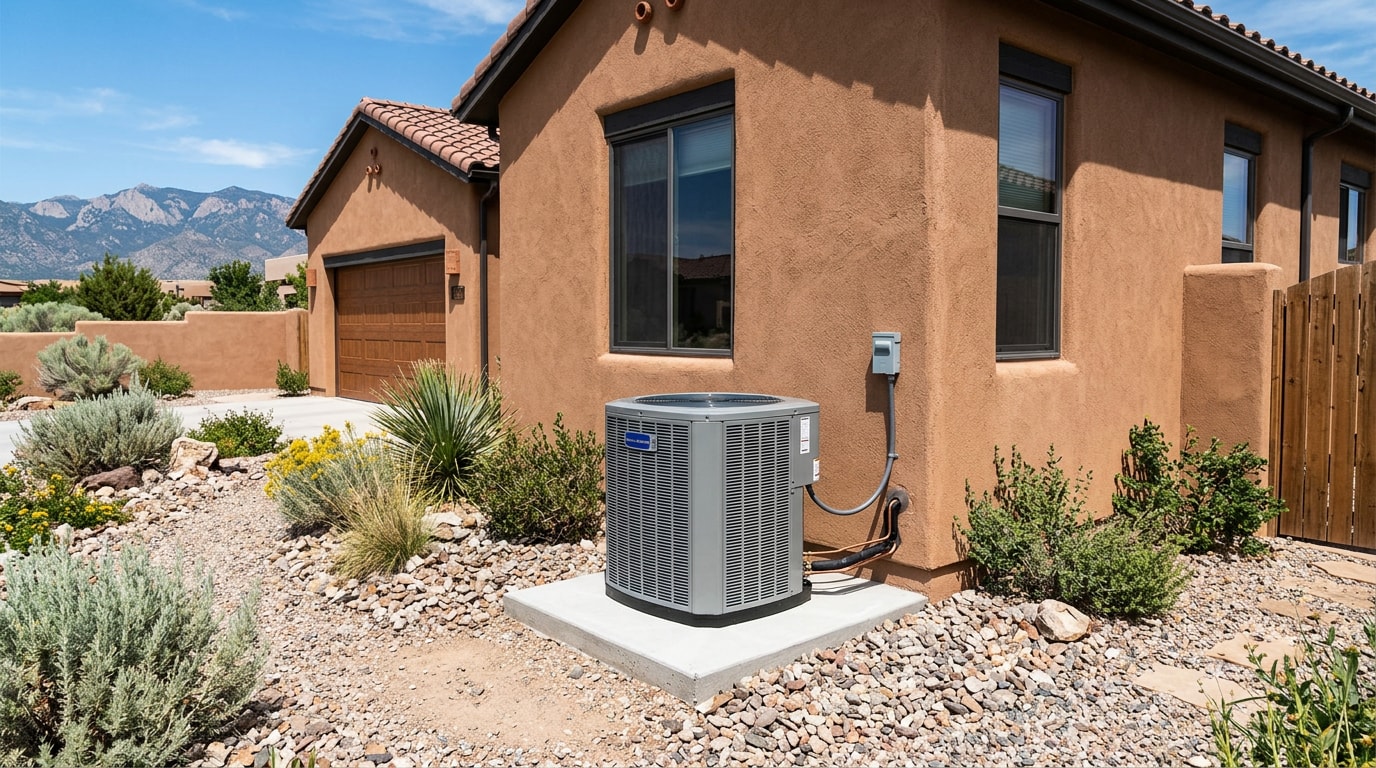
AC troubleshooting in Eagleridge, Pueblo, CO starts with knowing which symptoms you can check yourself and which ones mean the system needs a licensed technician. This guide walks through the six failures that show up most on Eagleridge service calls, what each one usually means, and exactly where to stop poking at the unit and pick up the phone.
Why Eagleridge Summers Are Hard on AC Systems
Pueblo doesn't just get hot, it stays hot for months, and that grind is what wears out capacitors, clogs filters, and pushes compressors past their limit. The average high temperature climbs to roughly 93 to 94 degrees through peak summer, with the average temperature for the month running around 77 degrees . Add in Pueblo's dry, dusty air, and filters and condenser coils load up with grit faster than they would in a wetter climate, which is the single biggest driver of the service calls below.
At Iron Ridge Heating & Air, our technicians see the same pattern every July in Eagleridge: capacitor failure far outpaces compressor failure once outdoor temperatures push past 95 degrees, because the capacitor is what absorbs the extra strain of a motor working overtime. That's useful to know before you assume the worst about an AC that suddenly won't start.
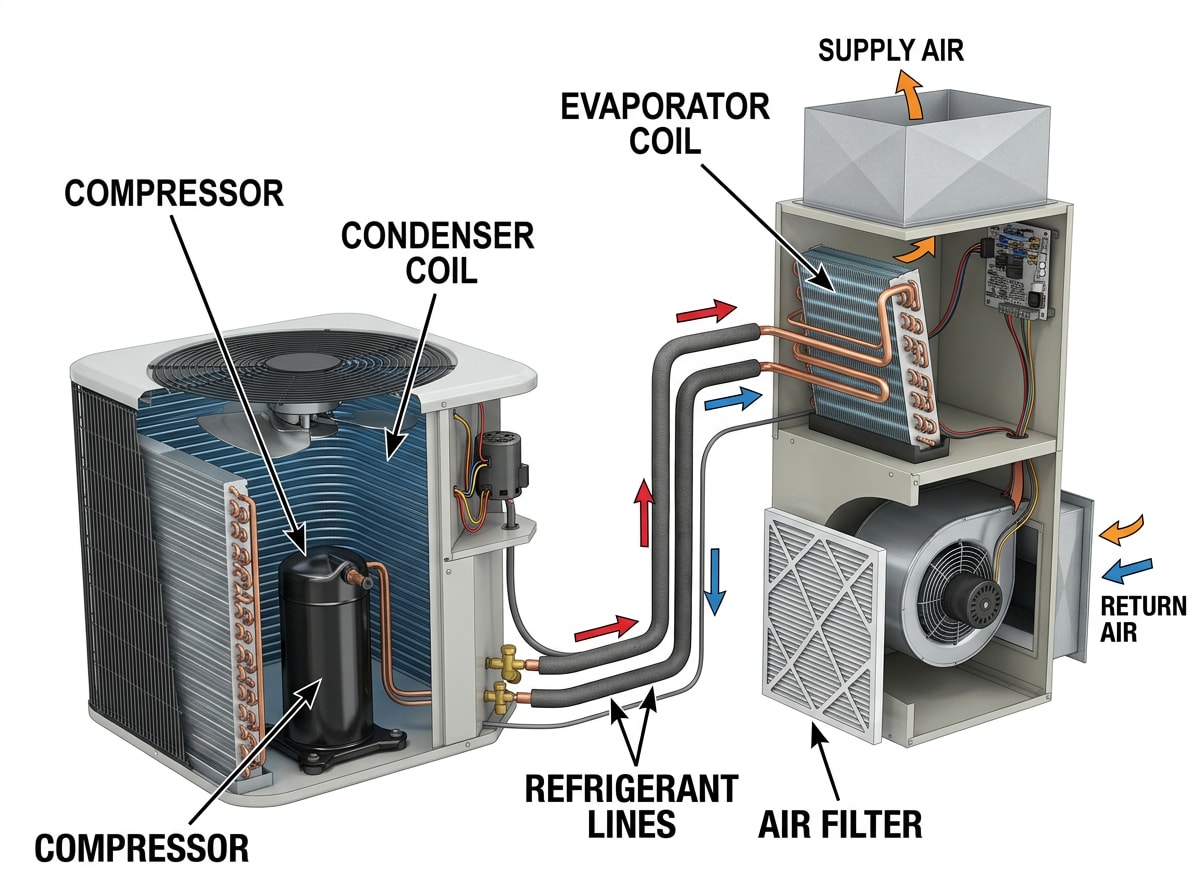
AC Won't Turn On
When an AC won't turn on, the cause is usually a tripped breaker, a blown capacitor, a failed contactor, or a thermostat that isn't communicating with the system.
Work through these in order:
- Confirm the thermostat is set to "cool" and at least a few degrees below room temperature.
- Check the breaker panel for a tripped switch and reset it once.
- Listen for a hum from the outdoor unit. A hum with no fan movement often points to a bad capacitor.
- If the breaker trips again immediately after resetting, stop resetting it.
A breaker that keeps tripping is an electrical fault, not a fluke, and repeated resets can damage the compressor. At that point it's time for professional AC repair rather than another trip to the breaker box.
AC Running But Not Cooling
AC not cooling is typically caused by a dirty air filter, low refrigerant, restricted airflow, a failing compressor, or a thermostat set incorrectly. Checking the filter and thermostat is safe for most homeowners. Refrigerant and compressor issues are not.
| Symptom | Likely Cause | DIY-Safe or Pro-Only |
|---|---|---|
| Thermostat in auto mode or set wrong | Thermostat setting | DIY-safe |
| Weak airflow, dusty vents | Dirty air filter | DIY-safe |
| Warm air, hissing near lines | Low refrigerant | Pro-only |
| Compressor runs, no cold air | Failed compressor | Pro-only |
| Blocked vents or ductwork | Restricted airflow | Check yourself, fix may need a pro |
A clogged outdoor condenser can choke airflow and mimic a refrigerant problem, so clearing debris, leaves, and grass clippings from around the unit is worth doing before assuming the worst. When airflow is obstructed, dirt can bypass the filter and accumulate on the evaporator coil, reducing its heat-absorbing capacity . Since a properly sealed AC system shouldn't lose refrigerant under normal use, a low charge almost always means a leak, and opening the refrigerant circuit to diagnose or repair that leak is work covered under federal leak repair requirements that fall under 40 CFR Part 82, Subpart F of the Clean Air Act rather than something to attempt on your own.
Strange AC Noises
Grinding, buzzing, hissing, or clicking each point to a different problem, and the sound itself is often the fastest diagnostic clue:
- Grinding usually means a failing compressor bearing or a loose fan blade.
- Buzzing often traces to electrical arcing or a weakening capacitor.
- Hissing can signal a refrigerant leak, especially near the line set.
- Clicking on and off repeatedly often points to a failing relay or thermostat signal.
- A loud, labored hum from the blower or condenser fan typically means a worn motor or slipping belt.
None of these are safe to open up and inspect yourself, since most involve either refrigerant lines or live electrical components.
AC Short Cycling
AC short cycling happens when the unit starts, runs for a few minutes, shuts off, and restarts, sometimes within the same five-minute span. It wastes energy and puts extra wear on the compressor every time it happens. Common causes include an oversized AC unit, a dirty condenser, low refrigerant, or a thermostat mounted somewhere that gets direct afternoon sun. If your AC turns on and off repeatedly, have the sizing and refrigerant charge checked by a technician rather than resetting the thermostat and hoping it stops.
AC Leaking Water or Freezing Up (Ice Buildup)
AC leaking water is most often caused by a clogged condensate drain line. That line carries moisture from the indoor coil outside, and when it fills with dirt or algae, water backs up and drips into the house instead. A plugged condensate drain can cause water damage in the house and affect indoor humidity levels , which is why it's worth checking even when the leak seems minor.
Ice on the evaporator coil is almost always an airflow problem, a clogged filter or blocked vent, or a refrigerant leak. If you spot ice buildup, shut the system off and let it thaw completely before inspecting anything further. Running a frozen unit can flood the compressor with liquid refrigerant and turn a simple filter swap into a compressor replacement.
When DIY Checks Aren't Enough: What a Professional Diagnostic Visit Covers
Once you've tried the safe checks above, a professional diagnostic visit fills in the rest. Knowing what to describe on the phone, and what a technician checks first, gets you to the right fix faster.
When you call, describe exactly what's happening: no cooling at all, a specific noise, water on the floor, or a system that won't start. That detail helps line up emergency HVAC repair services when the problem can't wait for a routine appointment.
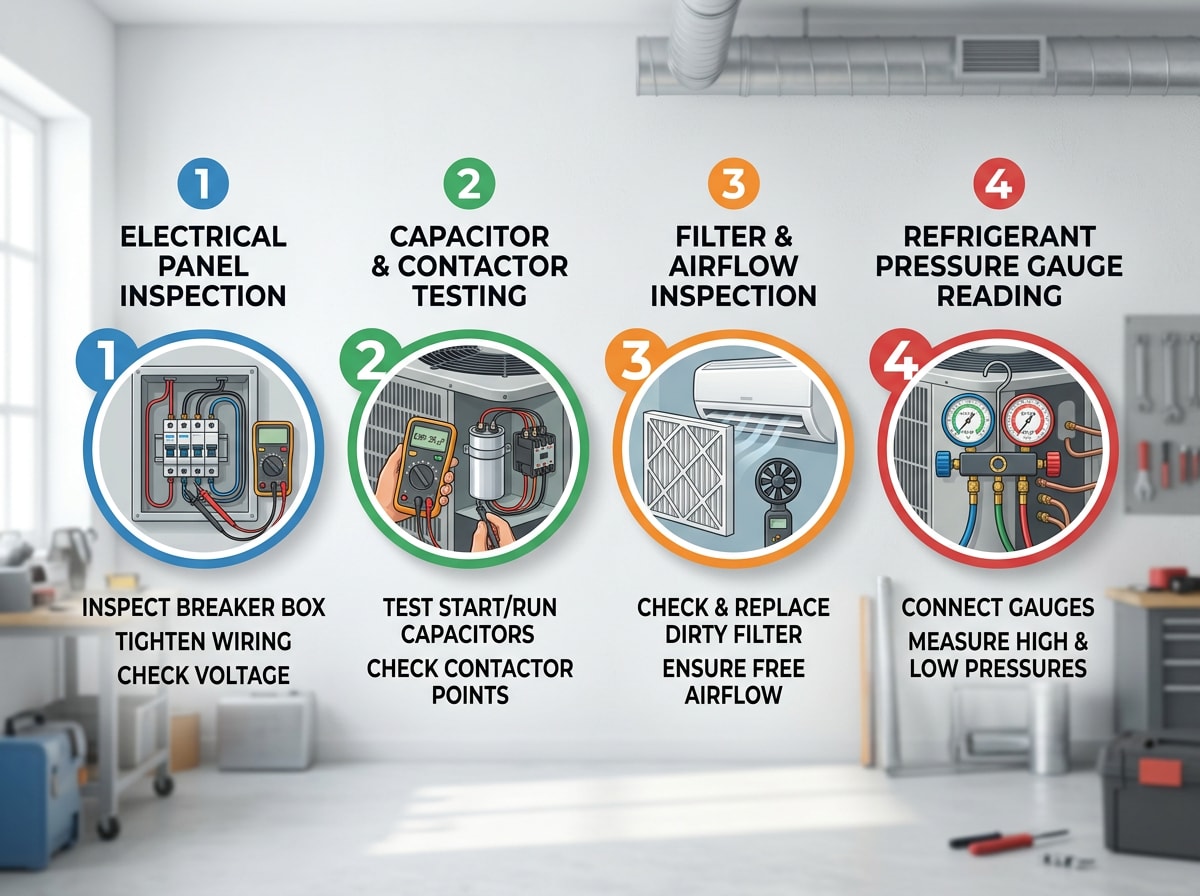
On arrival, a technician typically works through this sequence:
- Checks the breaker and electrical connections.
- Tests the capacitor and contactor under load.
- Inspects the filter and overall airflow, sometimes with dedicated airflow diagnostics if cooling is uneven room to room.
- Measures refrigerant pressure and checks for leaks before recommending a repair.
If you're in Eagleridge or anywhere else across Pueblo County and the checks above haven't solved it, get a free estimate and we'll get a technician out to diagnose it properly the first time.
Keep Eagleridge AC Systems From Breaking Down Again
Most of the failures above trace back to the same root cause: a system that didn't get checked before summer hit. Inspecting, cleaning, or changing air filters once a month in a central air conditioner is one of the most basic maintenance steps , and it's also the one homeowners skip most often.
Staying current on HVAC maintenance and tune-ups catches a weak capacitor or a dirty coil before it strands you on a 95-degree afternoon. For a broader look at national maintenance standards, the ENERGY STAR seasonal maintenance checklist covers the same filter, coil, and condensate drain checks a technician runs during a tune-up.
If your system is older and these breakdowns keep repeating, it may be cheaper long-term to replace rather than patch it. Our AC Replacement in Eagleridge, Pueblo, CO guide breaks down the costs, warning signs, and installation timeline for that decision.
FAQ
How Much Does AC Repair Cost in Pueblo, CO?
Most AC repairs run from under $200 for a capacitor or contactor swap to $1,000 or more for compressor replacement or a refrigerant leak repair. The exact price depends on the part, the system's age, and the refrigerant type it uses.
How Often Should I Have My Air Conditioning Serviced?
Once a year, ideally in spring before the heat sets in. Keeping a cooling and heating system at peak performance means having a contractor do annual pre-season check-ups, since contractors get busy once summer and winter arrive .
Is It Safe to Troubleshoot My AC Myself?
Yes, for a short list of checks: thermostat settings, breaker position, filter condition, and clearing debris from around the outdoor unit. Anything involving refrigerant, electrical components inside the unit, or a frozen coil should go to a licensed technician.
Why Does My AC Keep Turning On and Off?
That's short cycling, and it's usually caused by an oversized system, a dirty condenser, low refrigerant, or a thermostat exposed to direct sunlight. It's not something resetting the thermostat will fix on its own.
Is It Better to Repair or Replace My Old AC System?
Weigh the system's age, how often it's needed repairs lately, and whether cooling efficiency has dropped noticeably. A unit nearing 12 to 15 years old with frequent breakdowns usually costs more to keep patching than to replace.
What Is the Most Common Cause of AC Problems?
Dirty filters and skipped maintenance cause more AC problems than any other factor. They restrict airflow and stress the compressor, which drives most of the symptoms covered above. For full-system care, visit our AC and air conditioning repair page.