Finding the right apartment air conditioner in Penrose, CO means weighing hot Arkansas River valley summers against lease rules that limit permanent installs. Get the BTU sizing, efficiency rating, or unit type wrong, and you'll either overpay on electricity or bake through August. This guide breaks down exactly what to check before you buy, so you only have to shop once.
Things to Consider Before Buying an Apartment Air Conditioner
Four things decide whether an apartment air conditioner performs well or becomes a wasted purchase:
- How much square footage you're actually cooling
- What your lease and landlord allow
- How many BTUs the room needs
- What the unit will cost to run over a full cooling season
Get those four right and almost any unit type works. Get them wrong and even an expensive AC underperforms.
Square Footage & BTU Cooling Capacity
An apartment air conditioner's BTU rating tells you how much heat it can remove per hour. Matching that number to your room's square footage is the single most important sizing decision you'll make. Too few BTUs and the unit runs constantly without cooling the space. Too many and it short-cycles, wasting energy and leaving the room clammy.
Room air conditioner sizing is all about matching the room size to the air conditioner size, since a unit that is too big will be less effective and offer reduced air conditioner efficiency. Here's the official cooling-capacity chart:
| Room Size (sq ft) | BTU Needed |
|---|---|
| 100–150 | 5,000 |
| 150–250 | 6,000 |
| 250–300 | 7,000 |
| 300–350 | 8,000 |
| 350–400 | 9,000 |
| 400–450 | 10,000 |
| 450–550 | 12,000 |
| 550–700 | 14,000 |
| 700–1,000 | 18,000 |
Sun exposure, ceiling height, and poor insulation can push your actual need higher than this chart suggests, while shaded or well-insulated units may need less.
For the full official sizing table, check ENERGY STAR's room air conditioner buying guidance. If you'd rather have a pro confirm the right size for your space, our air conditioning installation team can size it for you.
SEER2, EER & CEER: Why Efficiency Ratings Matter for Apartment Bills
These ratings all measure the same basic idea: how much cooling a unit delivers per unit of electricity. But they apply to different equipment types, so they're not interchangeable when comparing options.
- SEER2 is the current efficiency standard for central and ductless mini-split systems, replacing the older SEER metric with stricter testing conditions.
- EER measures efficiency at a single, fixed outdoor temperature and often appears alongside SEER2 for mini-splits.
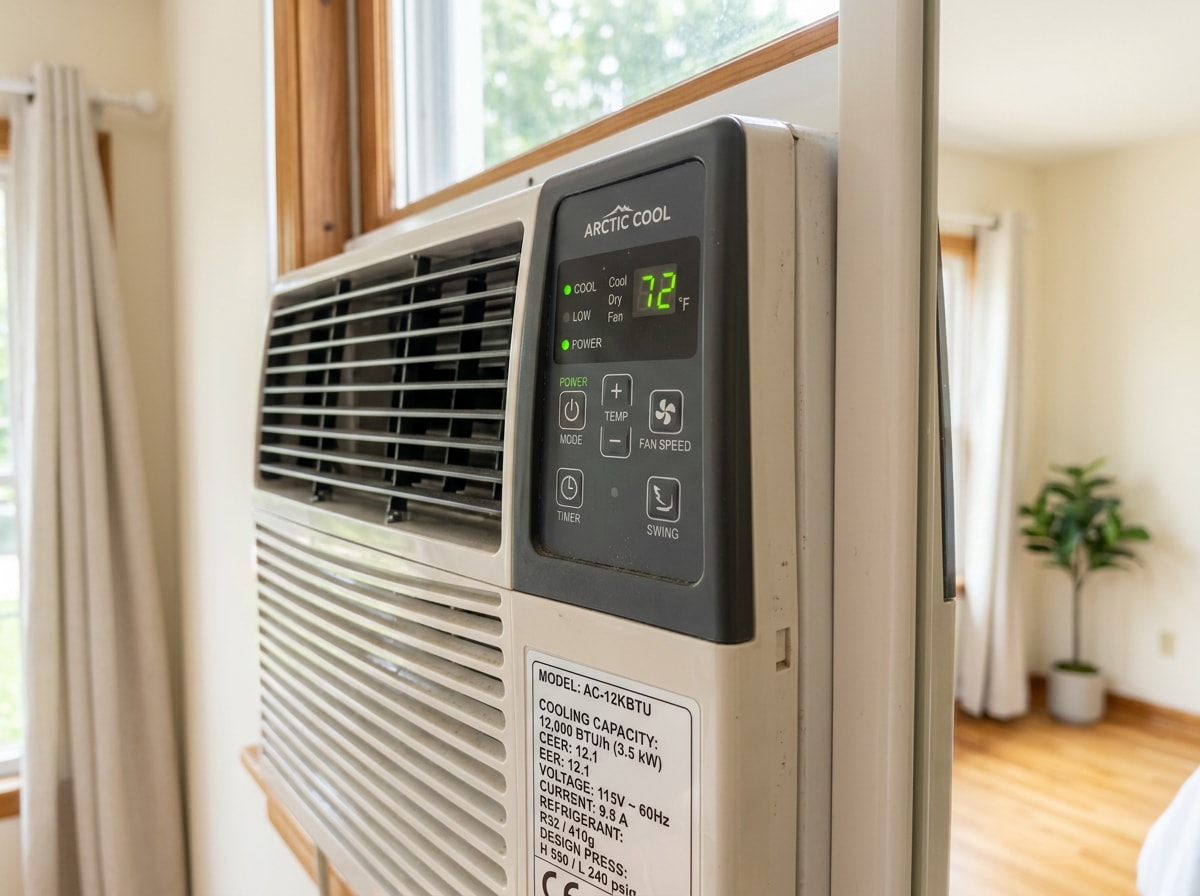
- CEER (Combined Energy Efficiency Ratio) is the rating on window and portable units sold for apartments, and it folds in standby power use that older ratings ignored.
A higher rating of any type generally means a lower electric bill over a cooling season, though the exact savings depend on your electricity rate and how many hours a day you run the unit. New federal efficiency standards for room air conditioners take effect in 2026, and the DOE expects the updated rules to save consumers more than $25 billion over the ensuing 30 years of shipments, with households using new units saving an estimated $150 compared with older models. Checking the yellow EnergyGuide label before you buy is still the fastest way to compare real running costs between models.
Types of Apartment Air Conditioners
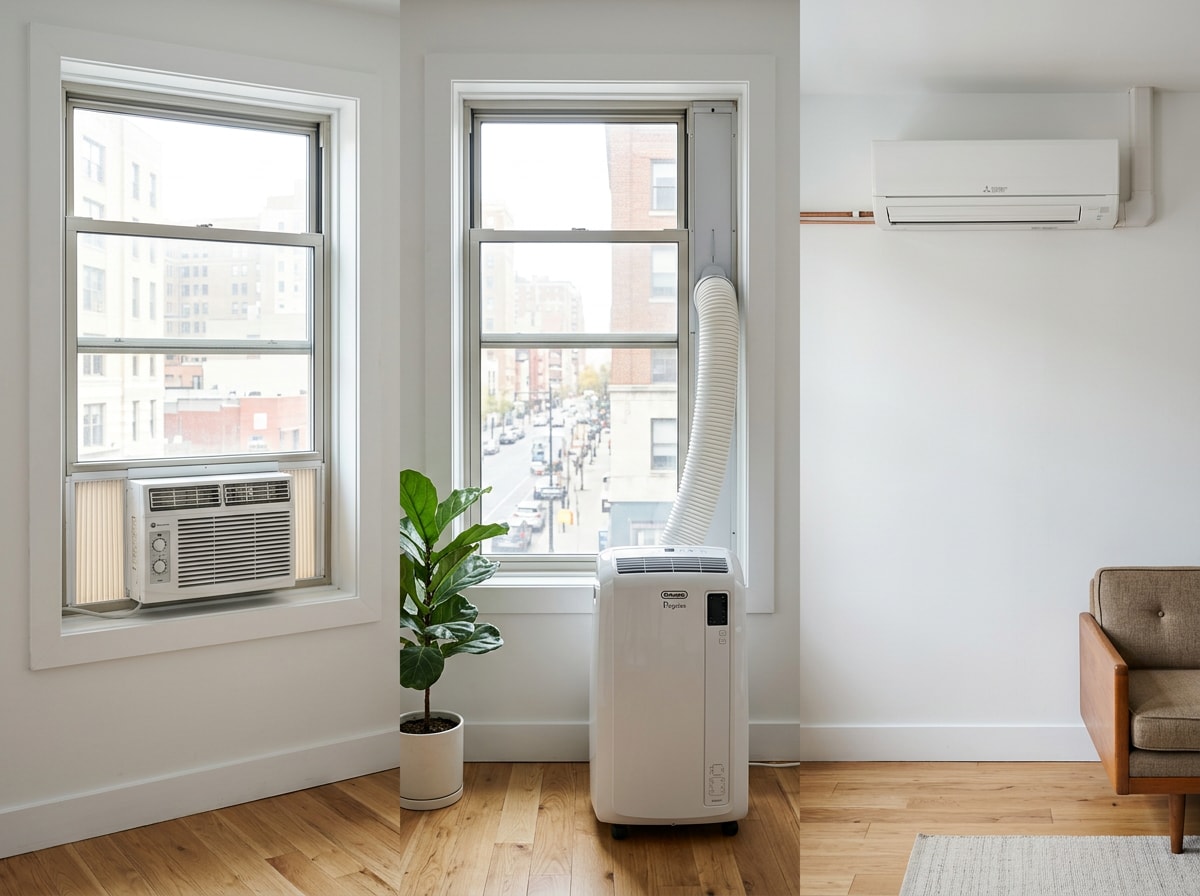
Most Penrose renters choose between three formats: window units, portable units, and wall-mounted ductless mini-splits. Window units remain the cheapest baseline option and work fine for a single room, but they require a window that opens to the right size and dimensions.
Portable Air Conditioners
A portable AC is popular because it requires no permanent installation. You can move it between rooms and take it with you when you move out, which makes it one of the more renter-friendly cooling options available.
Pros:
- No landlord approval typically needed since nothing attaches to the building
- Movable between rooms
- No tools required for setup
Cons:
- Runs louder than window or mini-split models
- Less efficient per BTU because the compressor sits inside the cooled space
- Still needs a window kit for exhaust venting, which uses part of a window opening
Wall-Mounted & Ductless Mini-Split Units
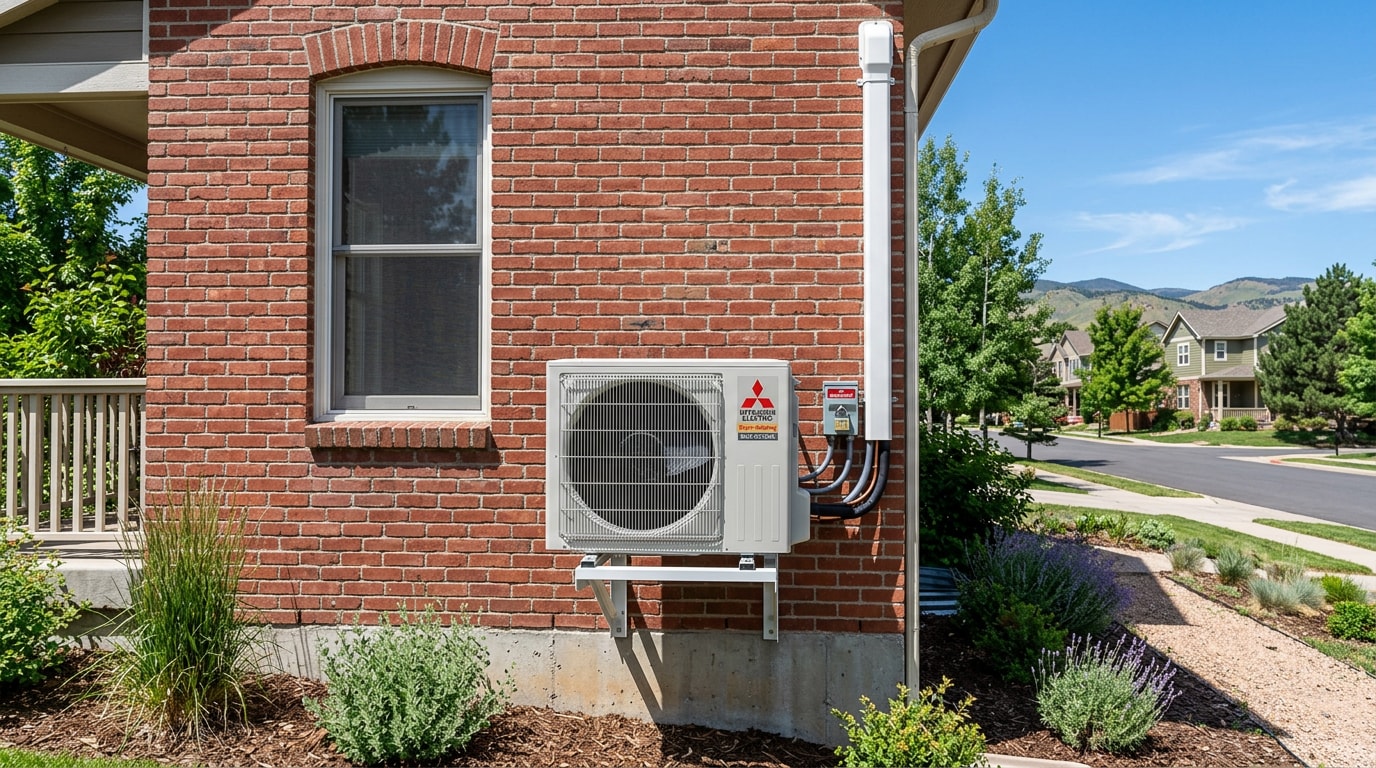
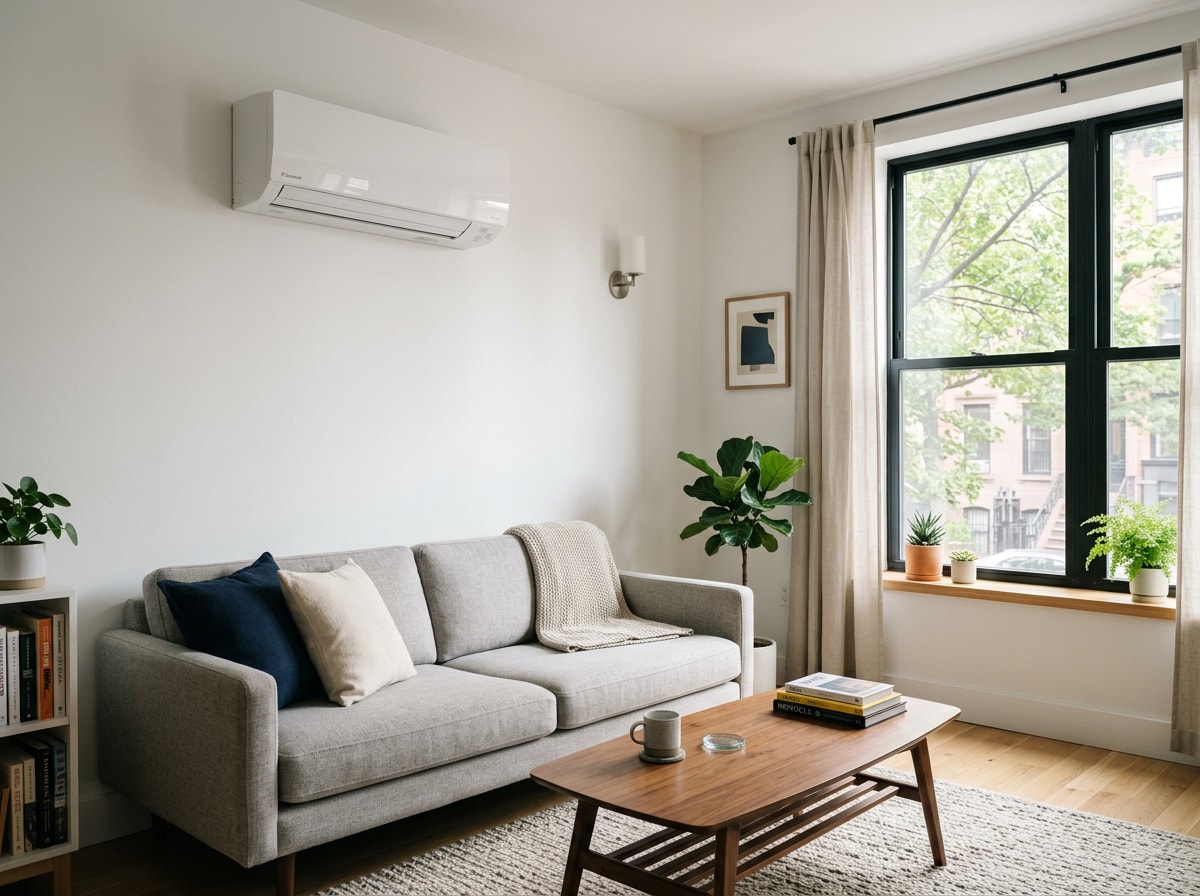
Ductless mini-splits are often the top apartment pick for anyone who can get approval to install one. They run quietly, cool efficiently, and can also provide heat in colder months. Wall-mounted units suit older buildings that tend to overheat in upper-floor units with limited window ventilation.
A single-zone system cools one room with one outdoor condenser. A multi-zone setup connects several indoor heads to one outdoor unit, letting you control temperatures room by room.
The catch: mini-splits need professional installation, including mounting an outdoor condenser, which requires landlord or HOA sign-off in nearly every multi-unit building in Penrose. Confirm that approval in writing before scheduling an install.
If you're deciding between a single room unit and a full ductless system for a multi-room apartment, our guide on AC mini split units in Pueblo County and Northside Pueblo walks through zoning and sizing in more depth. For installation, our central air add-on installations page covers what to expect, or get a free estimate and we'll confirm whether your unit qualifies for a mini-split before you buy.
Regional Rules, Codes & Refrigerant Changes That Affect Apartment AC Choices in Penrose, CO
Refrigerant regulations have shifted in recent years, and that affects what's sold and serviced today. Older units built around R-22 are long out of production, and R-410A equipment is being phased down as federal HFC rules tighten. The American Innovation and Manufacturing Act, enacted by Congress in 2020, authorizes EPA to phase down the production and consumption of HFCs by 85 percent in a stepwise manner by 2036, while also directing EPA to facilitate the transition to next-generation technologies to replace HFCs . If you're buying a used or older unit, parts and refrigerant for outdated systems can be harder to source than they were even a few years ago. An aging R-22 or early R-410A system may be a better candidate for AC replacement than repair.
Beyond refrigerant, apartment AC rules in Colorado are mostly set at the building and lease level rather than by a statewide law specific to window units. That means your HOA rules, building codes, and individual lease terms matter more day to day than any single Colorado apartment cooling rule. A common mistake renters make: buying a mini-split or through-the-wall unit before checking whether it meets current code or lease restrictions, only to find out it can't legally be installed as planned.
Before purchasing anything that requires permanent mounting, confirm both the refrigerant type and your building's installation rules. You can also check our Penrose, CO service area page for local installation notes, or reach out through our contact page before you buy.
Maintain Ideal Temperature in Your Apartment Using Smart AC Controllers
A smart AC controller clips onto or replaces the existing control panel on a window, portable, or mini-split unit. It turns a basic AC into something closer to a smart thermostat, complete with scheduling, remote control from a phone, and energy-use tracking. You don't need to replace your current unit to get these benefits.
For renters who can't install a full smart thermostat system, this is a low-cost way to automate cooling without touching the lease-restricted parts of the apartment. Many models also send alerts if a room gets too warm while you're away, which matters during Penrose's hottest stretches.
Our technicians see the same pattern on most Penrose service calls: renters who pair a mid-efficiency window or portable unit with a smart controller get noticeably more consistent comfort than those who just set a dial and forget it. Check our energy-efficiency system upgrades page if you'd like help pairing a controller with your existing unit, or visit our homepage to see the full range of services we offer around Penrose.
FAQ
What Size Air Conditioner Do I Need for an Apartment?
Most studios need 5,000 to 8,000 BTU, one-bedroom apartments typically need 8,000 to 12,000 BTU, and larger two-bedroom units often need 14,000 BTU or more. Use the ENERGY STAR chart above as a starting point, then adjust upward for strong sun exposure or high ceilings.
Can I Install an Air Conditioner in My Apartment Without Landlord Permission?
Most leases require written landlord or property-manager approval before installing a window or wall unit, since it affects the building's exterior and structure. Portable units usually face fewer restrictions. Always check your specific lease and local Penrose or Fremont County rental rules before installing anything.
How Much Does It Cost to Run an Air Conditioner in an Apartment?
It depends on the unit's size, its CEER or SEER2 rating, and your local electricity rate, so there's no single number that applies to every apartment. The EnergyGuide label on the unit shows its estimated annual energy use in kilowatt-hours, which you can multiply by your utility's per-kWh rate for a realistic monthly estimate. As a general trend, newer and higher-rated units cost noticeably less to run than older models bought before current efficiency standards.
Do I Need a Permit to Install a Window Air Conditioner in My Apartment?
A standard window air conditioner usually doesn't require a city building permit. However, your building's HOA rules and your landlord's written approval still apply, so check both before installing one, even for a short-term rental.
Is a Portable AC or a Mini-Split Better for a Penrose Apartment?
A portable AC is the easier, faster option if you can't get landlord approval for anything mounted to the building. A mini-split costs more upfront and needs sign-off for the outdoor condenser, but it runs quieter, cools more efficiently, and can double as heat in winter. If your building allows it, a mini-split is usually worth the extra step.