Your ac warranty Penrose, CO coverage might already have more holes than you think. Most manufacturer warranties protect parts, not labor, and skipping a single maintenance visit can quietly void years of protection. Here's exactly what's covered, what isn't, and how to keep your warranty intact before a breakdown forces the question.
Key Takeaways: AC Warranty Penrose, CO at a Glance
- Standard manufacturer warranty: 5 to 10 years on parts, with 10-year coverage usually requiring registration within 60 to 90 days of install.
- Labor is separate: Your installer, not the manufacturer, covers labor, and it's often just one year unless negotiated.
- Registration is time-sensitive: Miss the window and most brands drop you to the shorter base warranty automatically.
- Maintenance records matter most: A missing service history is the single most common reason warranty claims get denied in our experience serving Fremont County homes.
What the Manufacturer's Warranty Covers
A manufacturer's warranty protects the major mechanical components of your system against defects in materials or workmanship. It does not protect against normal wear, physical damage, or neglect. Coverage length depends heavily on whether the unit was registered after install.
Typical covered components include:
- Compressor (often the longest-covered part)
- Evaporator and condenser coils
- Fan motors
- Electronic control boards
Here's how registered coverage typically compares across major brands. Terms shift from year to year, so always confirm current details with your installer or the manufacturer directly.
| Brand | Registered Parts Warranty | Compressor Warranty |
|---|---|---|
| Carrier | 10 years | 10 years |
| Trane | 10 years | 10 years |
| Lennox | 10 years | 10 years |
| Goodman | 10 years | 10 years |
| Rheem | 10 years | 10 years |

Without registration, most brands drop to a 5-year base warranty, a meaningful gap if a compressor fails in year seven. If you're replacing a unit, our AC replacement team handles registration paperwork at the time of install so this never slips through the cracks.
What the Manufacturer's Warranty Does NOT Cover
A manufacturer's warranty does not cover labor, refrigerant, or routine wear items. It also won't cover damage caused by improper installation. These exclusions fall outside the scope of a parts-defect warranty, and they're the most common source of confusion homeowners run into.
Capacitors, contactors, filters, and similar wear items are excluded because they're expected to degrade with normal use. Refrigerant is almost never covered either, and older systems add another wrinkle: R-22 ("Freon") production and import has been banned in the U.S. since 2020 under the EPA's Section 608 refrigerant management program, which also sets technician certification rules that affect who can legally service these older units. If your home still runs an older R-22 system, that's worth factoring into any warranty or replacement decision.
What actually voids a warranty usually comes down to two things: missing the registration deadline and skipping documented annual maintenance. Unlicensed installation is another red flag. Manufacturers can and do deny claims if the install wasn't performed by a licensed contractor following recognized industry standards, such as those published by the Air Conditioning Contractors of America. Keeping maintenance records from a program like our HVAC maintenance and tune-up service gives you proof if a claim is ever disputed.
Parts vs. Labor Warranty: Why the Difference Matters
A manufacturer warranty covers the part itself. Someone still has to remove the old part and install the new one, and that labor is a separate warranty provided by your contractor. It's often just one year by default unless you negotiate more.
This distinction catches a lot of homeowners off guard. A free compressor under warranty doesn't help much if the labor to swap it costs $800 out of pocket.
Some Colorado contractors structure labor warranties in tiers instead of a flat one-year term:
- Years 1-3: Labor fully covered, no conditions.
- Years 4-7: Labor covered, contingent on documented annual maintenance.
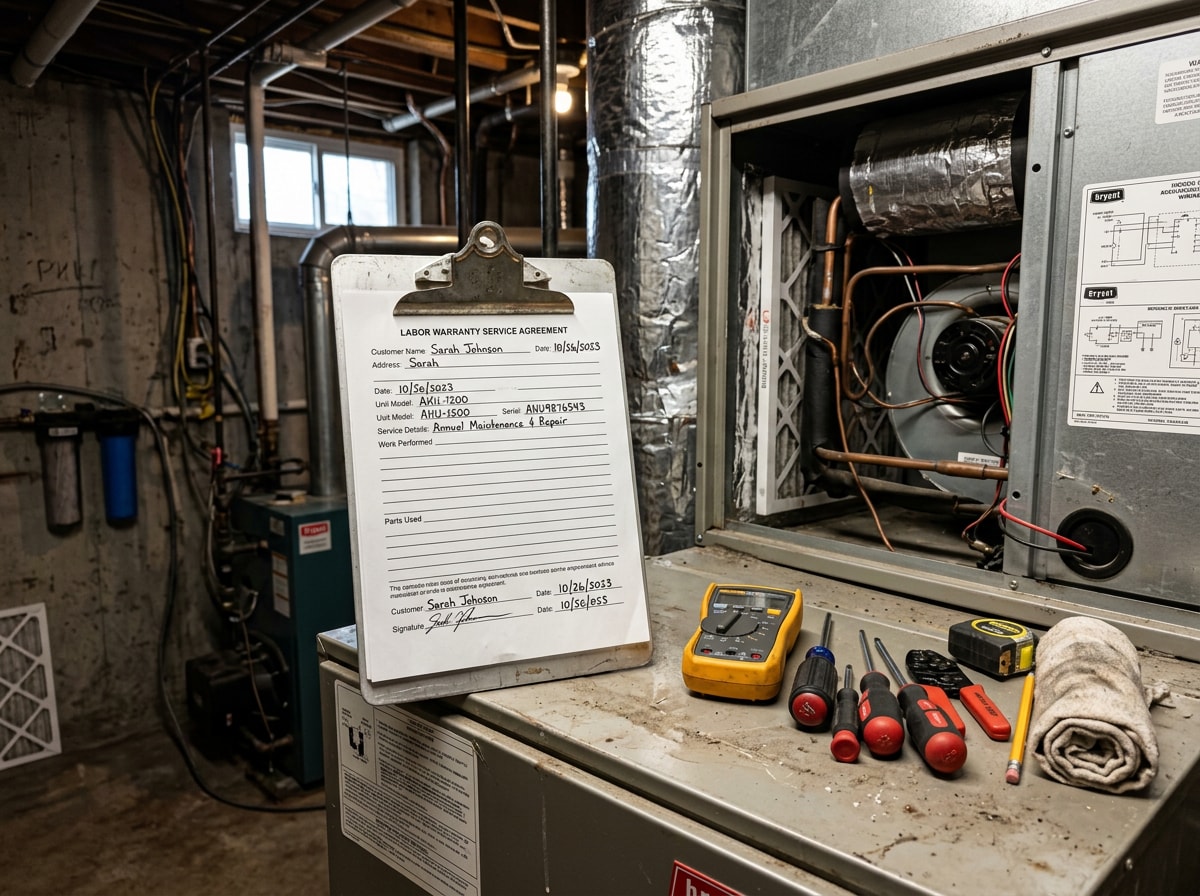
That tiered approach rewards homeowners who keep up with maintenance, and it gives contractors a reason to stand behind their own installation work longer. When comparing quotes, ask specifically about labor warranty length and whether it's conditional, not just the headline number in the brochure. Proper installation practice matters here too, since skipped startup steps are a leading cause of early compressor failure. You can see examples of completed installs on our projects page or check coverage questions specific to your area on our Penrose, CO service page.
How Penrose's Climate and Older Housing Stock Affect Your Warranty
Penrose sits at roughly 5,300 feet elevation in Fremont County, with hot, dry summers and wide day-to-night temperature swings. That combination stresses outdoor condensing units harder than a comparable system at sea level, and it's one more reason manufacturers lean so heavily on documented annual maintenance before honoring a claim.
A lot of Penrose and Fremont County homes also run older equipment, sometimes original systems from before 2010 that still use R-22 refrigerant. These units are legal to run and service, but parts availability and refrigerant cost have both gotten harder to manage as supplies shrink. If you're weighing a repair against a full system replacement on an older unit, it's worth getting that conversation started before the next heat wave rather than during one. For renters or homeowners considering a smaller unit instead of central air, our guide to the apartment air conditioner buying process in Penrose covers warranty basics for those systems too.
Is an HVAC Extended Warranty Worth It?
Once the original manufacturer coverage lapses, you're left deciding whether an extended warranty makes financial sense. For a system already past year eight or nine, extended coverage can be a reasonable hedge against an expensive compressor failure. Compare the annual cost against your system's remaining expected lifespan first.
It helps to understand the difference between a home warranty and a manufacturer warranty. A home warranty is a renewable annual plan covering general wear-and-tear across appliances and systems. A manufacturer warranty is defect-based and tied specifically to your unit. The two sometimes overlap, so check both before paying twice for the same protection.
If you ever need to file a claim, start with your installing dealer or the manufacturer's customer service line, not a random repair company. Unauthorized technicians can sometimes void remaining coverage. Whether an extended plan is worth it really depends on your system's age, condition, and how long you plan to stay in the home. If you're not sure where your system stands, our AC repair team can check your warranty status and maintenance history during a service visit.
Why Trust This Guide
This guide was put together by the team at Iron Ridge Heating & Air, a licensed HVAC contractor serving Penrose, Fremont County, and the greater Pueblo and Colorado Springs area. In our service calls across this region, the single most common reason we see warranty claims denied isn't a mechanical defect. It's a missing maintenance record. We register every new install at the time of service and keep digital maintenance logs for exactly this reason.
If you're not sure what your current warranty covers, or you want a system installed with registration and documentation handled correctly from day one, get a free estimate and we'll walk you through it before you sign anything.
FAQ
How often should I service my central air conditioner to reach its expected 10-15 year lifespan?
Schedule professional maintenance once a year, ideally in spring before peak cooling season. Consistent maintenance is often required in writing to keep manufacturer and labor warranties valid, and ENERGY STAR notes that routine upkeep like filter changes and coil cleaning is the biggest factor in reaching full equipment lifespan, a point detailed in its HVAC maintenance guidance.
How long is a typical air conditioner warranty?
A typical air conditioner warranty covers parts for 5 to 10 years, with most manufacturers extending base coverage to 10 years once the unit is registered. Always confirm exact terms directly with the manufacturer or your installer, since coverage varies by product line and can change from year to year.
Does an AC warranty cover labor costs?
Usually not. A standard manufacturer warranty covers defective parts only. Labor to diagnose, remove, and install the replacement part is billed separately unless you purchased an extended plan or your installer includes a labor warranty as part of the original installation agreement.
What voids an air conditioner warranty?
The two most common causes are missing the registration deadline after install and skipping documented annual maintenance. Unlicensed installation, DIY repairs, and using non-approved parts can also void coverage, since manufacturers require proof the system was installed and serviced correctly.
Does a home warranty cover my air conditioner?
It can, but differently than a manufacturer warranty. Home warranty AC coverage is typically an annual, renewable plan addressing general wear-and-tear failures, while the manufacturer's warranty is defect-specific and tied to the original unit regardless of who owns the home.
How much does an extended AC warranty cost?
Extended warranties vary by contractor and system size, but they're generally priced as a flat annual or multi-year fee based on your unit's age and condition. Ask for the cost in writing and compare it against the likely price of a compressor replacement before deciding if it's worth it.