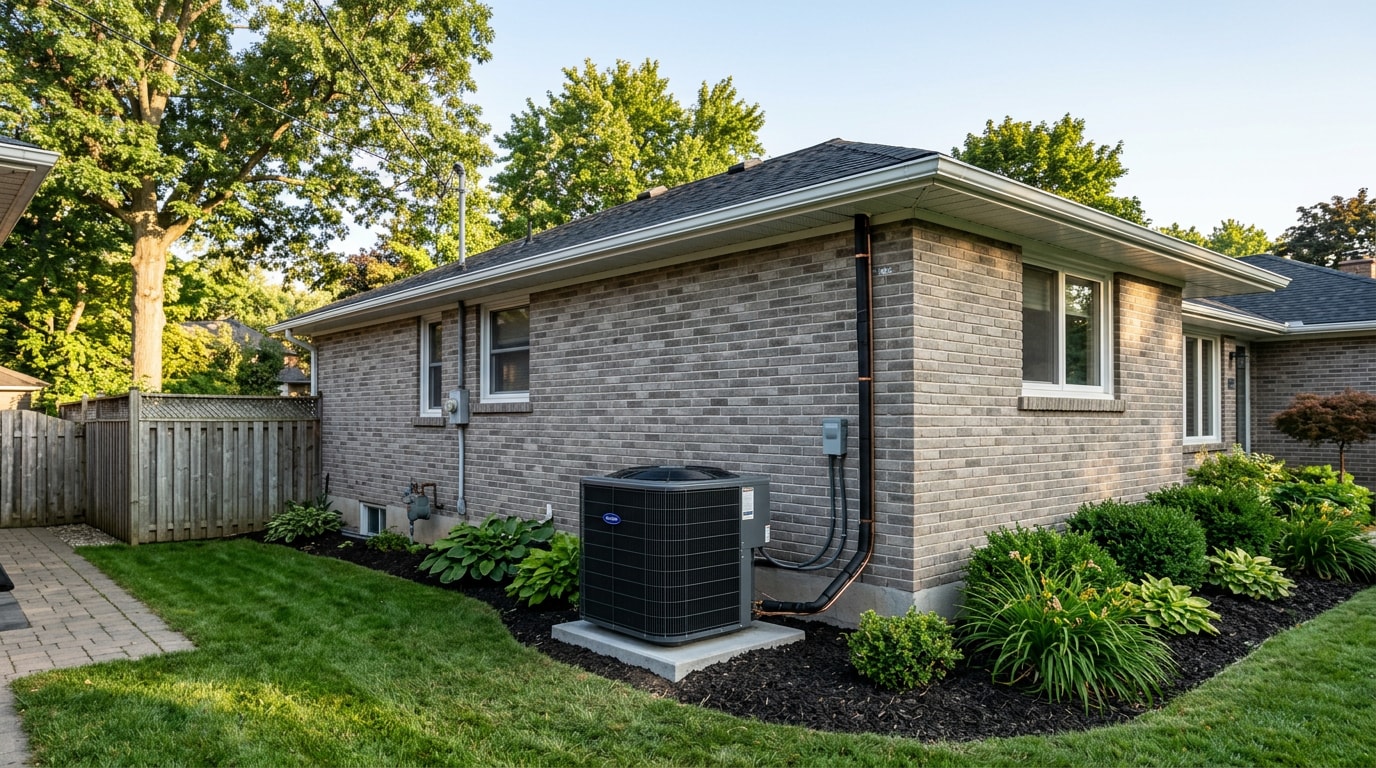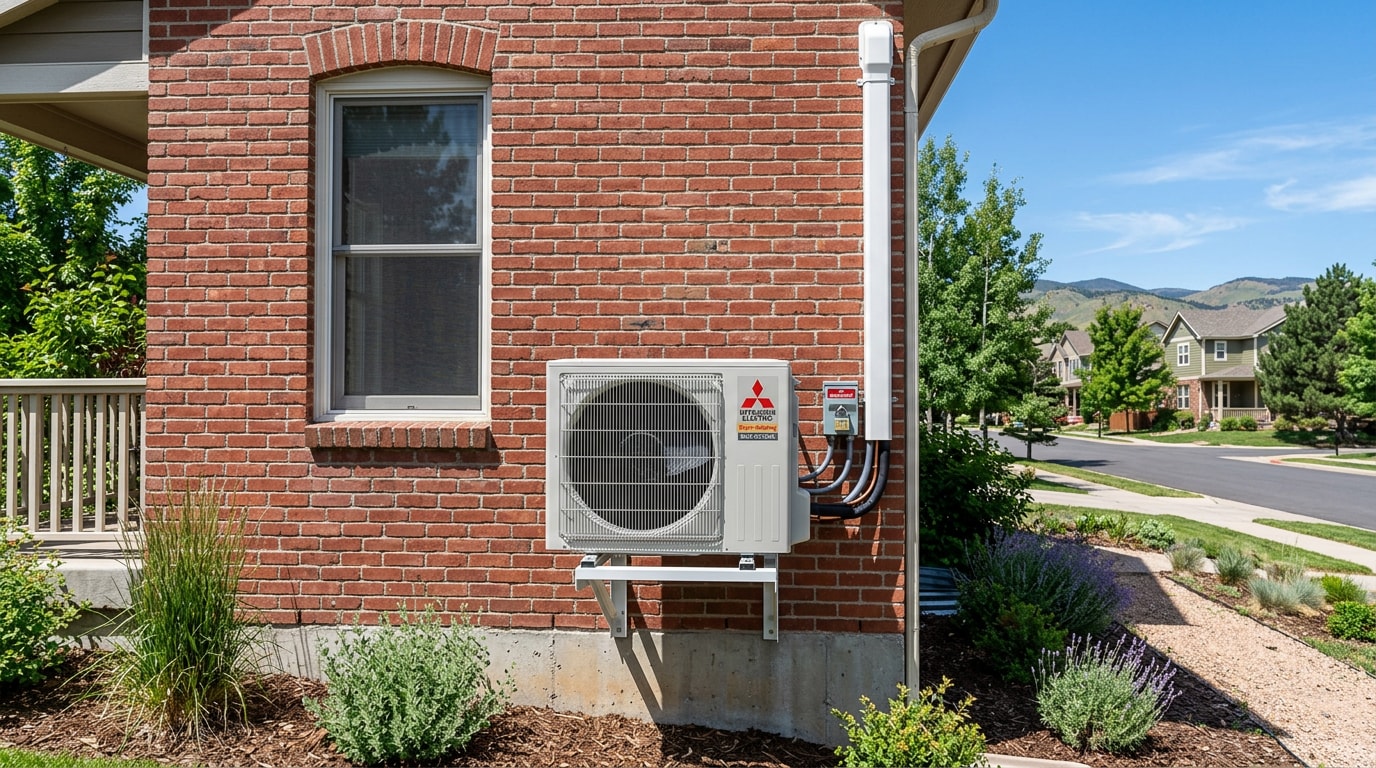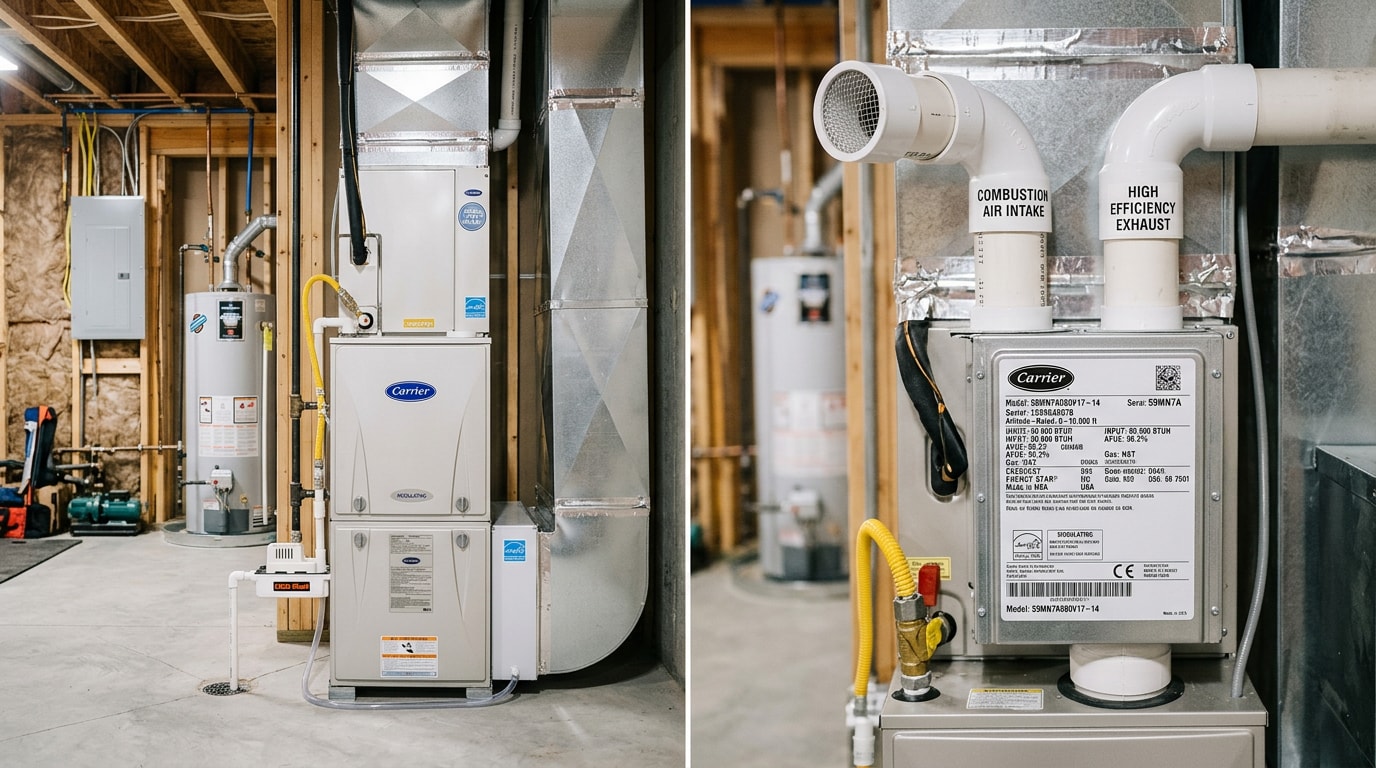
Central heating installation in Fountain, CO is not a one-size-fits-all job. At roughly 5,500 feet of elevation, a furnace sized the way a national big-box retailer sizes it for sea level will run hot, short-cycle, or underheat your home all winter. This guide breaks down system types, 2026 pricing, the permit process, and what a correctly sized install actually looks like here.
Central Heating System Options for Fountain Homes
Most Fountain homes land on one of three central heating paths: forced-air furnace and duct, hydronic boiler and radiator, or radiant floor. Each has a different upfront cost, comfort profile, and maintenance pattern.
| Feature | Furnace & Duct | Boiler & Radiator | Radiant Floor |
|---|---|---|---|
| Heat delivery | Forced air | Hot water/radiant | In-floor hot water or electric |
| Typical AFUE (2026) | 95-98% | 85-95% | N/A (closed-loop efficiency) |
| Install cost range | $4,500-$9,500 | $6,500-$13,000 | $8,000-$16,000+ |
| Best for | Homes with existing ductwork | Even, quiet heat without moving air | Cold floors, allergy-sensitive households |
A furnace that carries the ENERGY STAR label must exceed 90% AFUE, and today's top gas models reach into the high 90s. To earn the Energy Star rating, a furnace must exceed 90% AFUE, and Energy Star-labeled furnaces boast a 90% to 98.5% AFUE rating. That efficiency ceiling matters more in Fountain than it does at sea level, because of how thin air changes combustion. More on that below.
Still weighing furnace versus boiler versus radiant for your specific floor plan? See examples of completed installs or get a free in-home estimate and we'll walk the house with you before you commit to a system.
What Central Heating Installation Costs in Fountain, CO in 2026
Final pricing depends on three things: the condition of your existing ductwork or piping, the efficiency tier you choose, and whether the job needs new venting or electrical work. A straight furnace swap using existing ducts sits at the low end of the range above. A full system changeover, a boiler conversion, or a home that never had central heat (common in older parts of Fountain and Olde Town) pushes costs toward the high end.
Three line items homeowners often forget to budget for:
- Permit fees through Pikes Peak Regional Building Department
- Altitude kit or burner orifice changes if the new unit wasn't factory-set for 5,000+ feet
- Duct modifications if you're converting from a boiler or adding central air later
If energy-efficiency rebates are part of your decision, our energy-efficiency system upgrades page covers what's currently available for Fountain homeowners.
Why Fountain's Elevation Changes Furnace Sizing
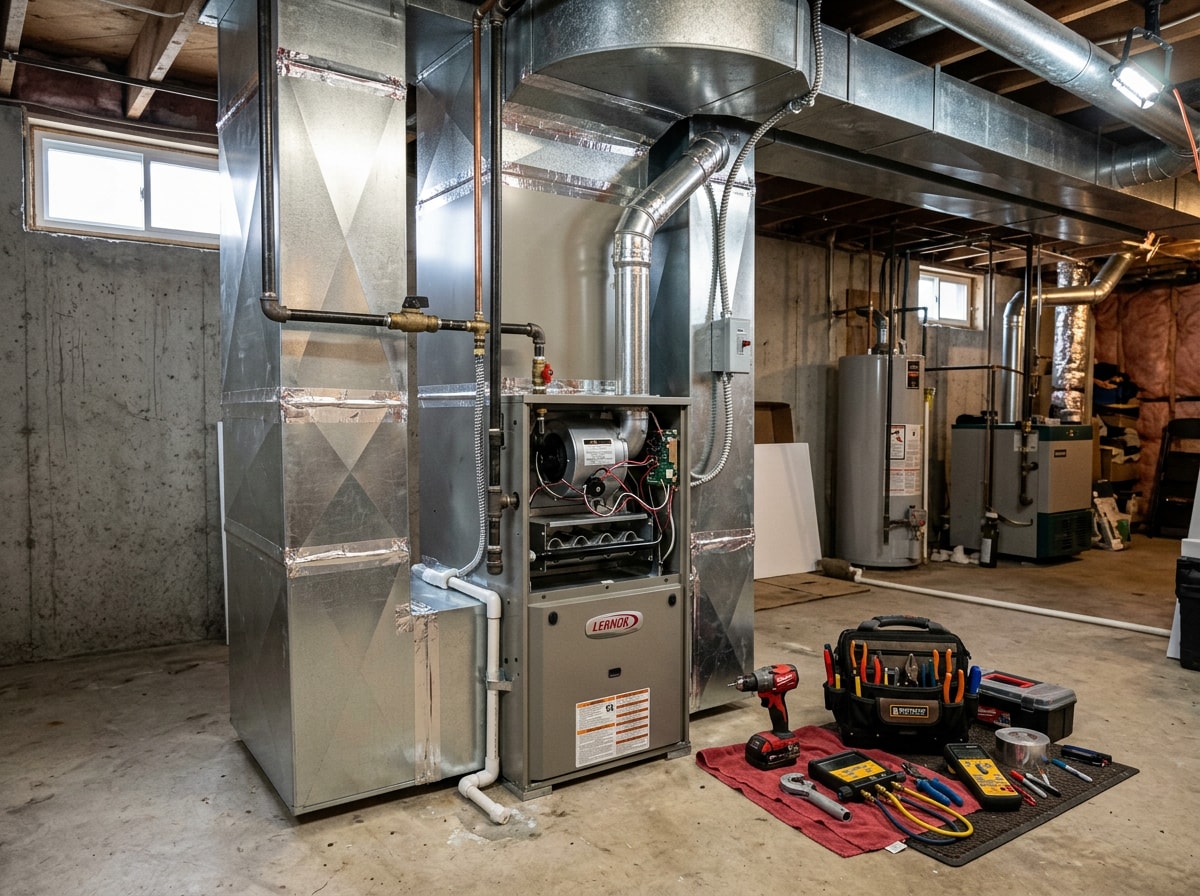
This is the part generic national guides skip entirely. Fountain sits around 5,500 feet, and gas appliances lose combustion efficiency as elevation increases because there's less oxygen per cubic foot of air to burn the fuel cleanly.
Model fuel gas code requires contractors to account for this directly. Gas input ratings of appliances shall be used for elevations up to 2,000 feet, and the input rating of appliances operating above that elevation shall be reduced, at the rate of 4 percent for each 1,000 feet above sea level, before selecting appropriately sized appliances. At Fountain's elevation, that works out to roughly a 14% derate on nameplate input before you even factor in duct losses or insulation.
What this means in practice: a furnace that looks correctly sized on a spec sheet can still leave rooms cold if the installer didn't apply the altitude adjustment or didn't size the equipment to compensate for it. This is one of the most common reasons we get called out to re-evaluate installs done by crews unfamiliar with the Pikes Peak region's elevation. Ask any contractor bidding your job directly how they handle altitude derating. If they can't answer in one sentence, keep calling.
Permits & Licensing: What Pikes Peak Regional Building Department Requires
Furnace, boiler, and central heating installs in Fountain fall under El Paso County jurisdiction through the Pikes Peak Regional Building Department (PPRBD). PPRBD was created by the Colorado Springs and El Paso County governments in 1966 to ensure a unified minimum standard for construction, electrical, plumbing and mechanical work.
A few permit facts worth knowing before you sign a contract:
- Furnace, boiler, and AC installations all require a permit — this isn't optional paperwork, it's a safety inspection tied to combustion and venting.
- Only licensed, registered contractors can pull the permit on your behalf.
If a contractor is hired for work that requires a permit, the contractor must be licensed and registered with PPRBD, and you can call 719-327-2880 or check the website to verify a contractor is licensed and registered.
- Skipping the permit creates resale problems. Unpermitted mechanical work routinely surfaces during home inspections and can delay or kill a sale.
You can confirm licensing status or review homeowner permit rules directly on the PPRBD homeowner permit page. Our crews pull and schedule these permits as part of every install quote, whether you're in Fountain or Colorado Springs.
The Furnace Installation Process, Step by Step
Replacement sounds bigger than it usually is. Here's the actual sequence on a standard furnace swap:
- Free in-home assessment. A technician checks your ductwork, existing venting, gas line size, and takes elevation into account for sizing.
- Written estimate. You get a flat-rate quote before any work starts, including permit fees.
- Scheduling. Most straightforward jobs book within a few days, faster if it's an emergency replacement.
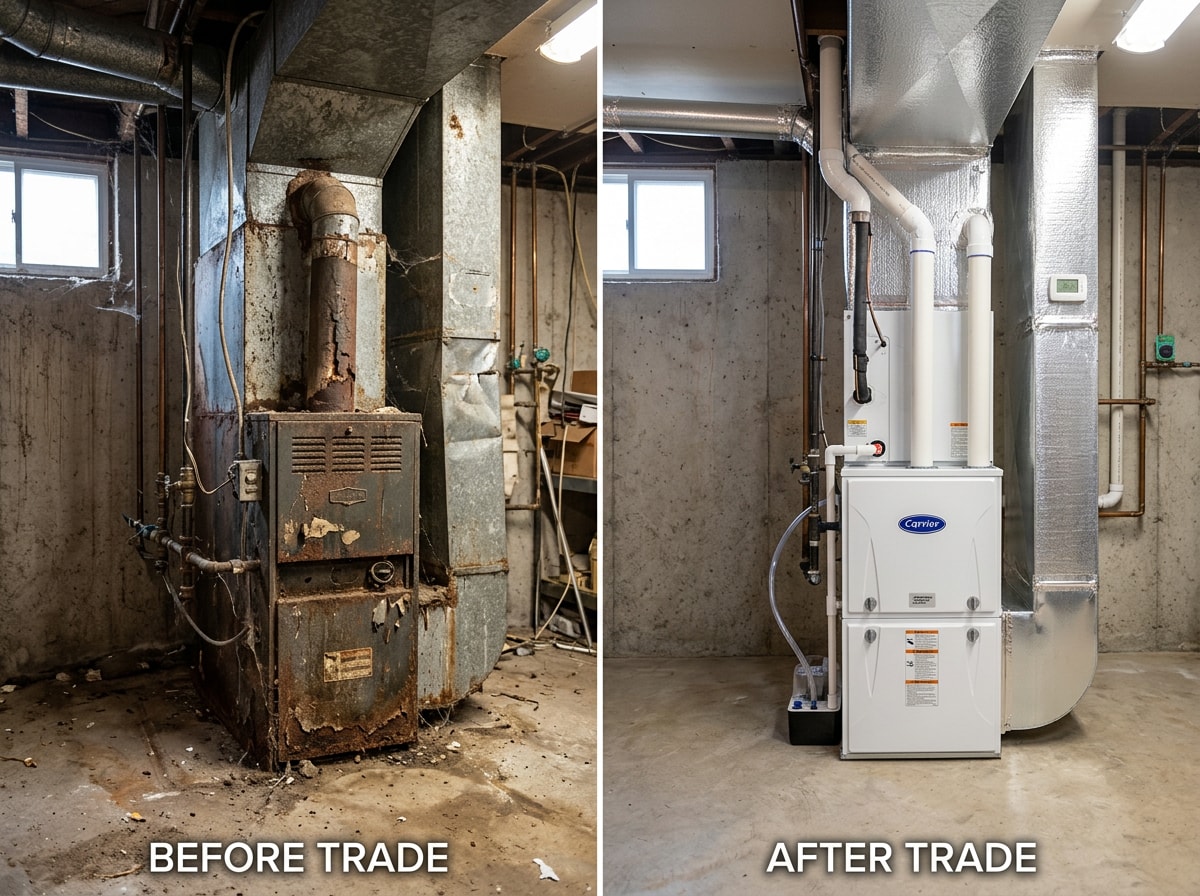
- Old unit removal and new install. This includes connecting to existing ductwork, setting altitude-adjusted gas pressure, and testing the heat exchanger and venting.
- Permit inspection. PPRBD inspects combustion venting and gas connections before the job is signed off.
- Walkthrough. You get a rundown on the thermostat, filter schedule, and warranty paperwork.
A straightforward swap with no duct changes usually takes one day. Jobs requiring new ductwork, electrical upgrades, or a boiler conversion typically run two to four days once you include the permit inspection window.
If your current furnace is cycling on and off instead of making it through an install decision, it's worth reading why furnaces won't stay on in Pueblo County Northside homes before you decide between repair and replacement. And if your furnace dies mid-winter, our emergency HVAC repair services team doesn't make you wait for a scheduled slot.
Choosing a Certified Furnace Contractor in Fountain, CO
Not every installer handles altitude correction the same way, and the difference shows up on your gas bill and in how evenly your home heats. Look for a few specific things before you sign anything:
- Active PPRBD mechanical license, verifiable by phone or on their site
- NATE-certified technicians. North American Technician Excellence is the industry's primary third-party credential.
Founded in 1997, NATE is the nation's largest non-profit certification organization for heating, ventilation, air conditioning and refrigeration technicians, and certification exams test real-world installation and service knowledge rather than just classroom theory, per NATE's own technician certification program.
- Written, flat-rate estimates before work begins, not a number quoted over the phone
- A clear answer on altitude derating, as covered above
- Emergency availability, since furnaces rarely fail on a convenient schedule
Our installers hold current PPRBD mechanical licensing and NATE certification, and every estimate includes the permit, the altitude-adjusted equipment sizing, and a written scope before we touch anything. If you're comparing bids, our full HVAC contractor services page covers what's included in a typical scope of work, and you can see completed jobs on our projects page.
Furnace vs. Boiler vs. Radiant: Which Fits Your Home?
- Choose furnace and duct if you already have ductwork and want the lowest upfront cost, plus the option to add central air later through central air add-on installation.
- Choose boiler and radiator if you want quiet, even heat without moving dust and allergens through ducts, and you're not planning to add central air.
- Choose radiant floor if cold floors or allergy concerns are your main complaint and budget allows for the higher install cost.
None of these is objectively "best." They're a tradeoff between upfront cost, comfort style, and whether central air is part of your long-term plan. A technician walking your home can tell you which option actually fits your ductwork, gas line capacity, and budget in under 30 minutes, something no cost calculator online can do accurately.
FAQ
Do you provide furnace installation in Fountain, CO?
Yes. Furnace installation in Fountain includes a free in-home assessment, a written flat-rate estimate, altitude-adjusted equipment sizing, and PPRBD permit handling, done by licensed, NATE-certified technicians.
How much does central heating installation cost in Fountain, CO?
In 2026, expect $4,500-$9,500 for a furnace-and-duct system and $6,500-$13,000 for a boiler-and-radiator system, depending on ductwork or piping condition, efficiency tier, and permit fees. Get an exact number from a free in-home estimate since online calculators can't account for your specific ductwork or elevation adjustment.
How long does central heating installation take?
A straight furnace swap using existing ductwork usually takes one day. Installs needing new ductwork, electrical upgrades, or a permit inspection window typically run two to four days.
Do I need a permit for furnace installation in Fountain, CO?
Yes. Fountain falls under Pikes Peak Regional Building Department jurisdiction, and furnace, boiler, and AC installs all require a permit and inspection. Skipping it can cause code violations or resale issues later.
Does elevation really affect furnace sizing in Fountain?
Yes. Code requires input ratings to be reduced about 4% for every 1,000 feet above 2,000 feet elevation. At Fountain's roughly 5,500 feet, that's close to a 14% derate before duct losses are even factored in. Equipment not sized for this can underheat your home.
What's the real difference between a furnace and a boiler?
A furnace heats and moves air through ductwork; a boiler heats water that circulates through radiators or in-floor tubing. Furnaces generally cost less to install and double as a path to central air. Boilers deliver quieter, more even heat but don't move air for cooling.
Is radiant floor heating worth the extra upfront cost?
It depends on your priorities. Radiant floors eliminate cold spots and don't circulate dust the way forced air does, which matters for allergy-sensitive households. The tradeoff is a higher install cost and a system that's harder to retrofit with central air later.
Ready to get a real number instead of a guess? Request a free estimate and we'll size your system correctly for Fountain's elevation the first time, not after a cold January teaches you the hard way. You can also start from our homepage to see our full range of heating and cooling services.