Furnace won't stay on in Pueblo County Northside? You're not imagining it. A furnace that fires up and quits within minutes is short cycling, and it's the system flagging a problem on its own. The timing of that shutdown points straight to the cause, which means you can often narrow it down before anyone even picks up a tool.
Our techs field this exact call across Northside Pueblo every winter, and the shutdown timing is almost always the fastest way to triage it over the phone. Use the table below to match your furnace's behavior to a likely cause before you start troubleshooting.
| Shutdown Timing | Likely Cause | Fastest First Check |
|---|---|---|
| 5–30 seconds after ignition | Dirty flame sensor or ignition fault | Clean the flame sensor |
| 30–90 seconds | Pressure switch, draft inducer, or blocked venting | Check the condensate line and flue |
| 2–5 minutes | Restricted airflow or overheating | Replace the air filter |
| Right as the house hits temperature | Thermostat issue or oversized furnace | Check thermostat mode and placement |
What Short Cycling Looks Like
Short cycling means a furnace starts, runs briefly, shuts off, and restarts repeatedly instead of completing a full heating cycle. It's commonly caused by restricted airflow, a dirty flame sensor, thermostat misconfiguration, or a safety switch reacting to overheating. It's a mechanical problem, not a quirky furnace having a bad day.
This matters more in this part of Colorado than in milder climates. Pueblo's 30-year average winter temperature runs 32.2 degrees Fahrenheit , and overnight lows regularly drop into the teens and single digits during a hard freeze. A furnace that short cycles during one of those nights can leave pipes and people exposed fast. If your system won't hold a cycle at all, our emergency heating repair team can get someone out quickly.
Common Causes of a Furnace That Won't Stay On
Most short-cycling complaints trace back to a handful of repeat offenders. Work through them in order, starting with the easiest fix, before you call a furnace repair technician.
Dirty or Clogged Air Filter
A clogged air filter is the most common reason a furnace won't stay on. It restricts airflow across the heat exchanger. Internal temperatures spike. The high-limit switch trips and shuts the system down as a safety measure.
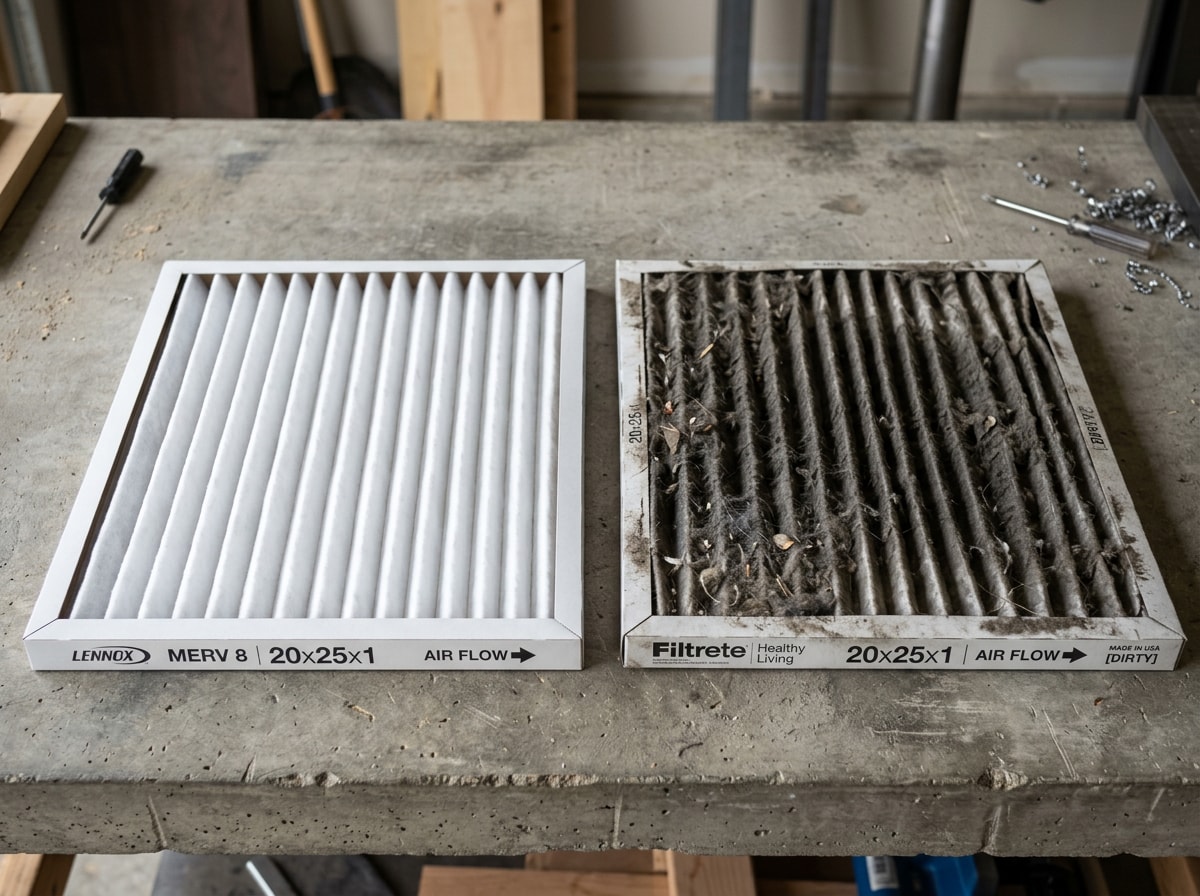
Replace standard 1-inch filters every one to three months. Check your filter every month during heavy use months like winter, and if it looks dirty after a month, change it. Double-check the size and airflow arrow are correct before you slide it back in.
If short cycling stops right after a filter swap, overheating from airflow restriction was the cause all along. A clogged filter also forces the blower motor to work harder than it's built for. That shortens its life and can create a fire hazard if it's ignored for months. Routine filter changes are part of a basic furnace maintenance and tune-up plan, and they're the cheapest fix on this entire list.
Dirty or Faulty Flame Sensor
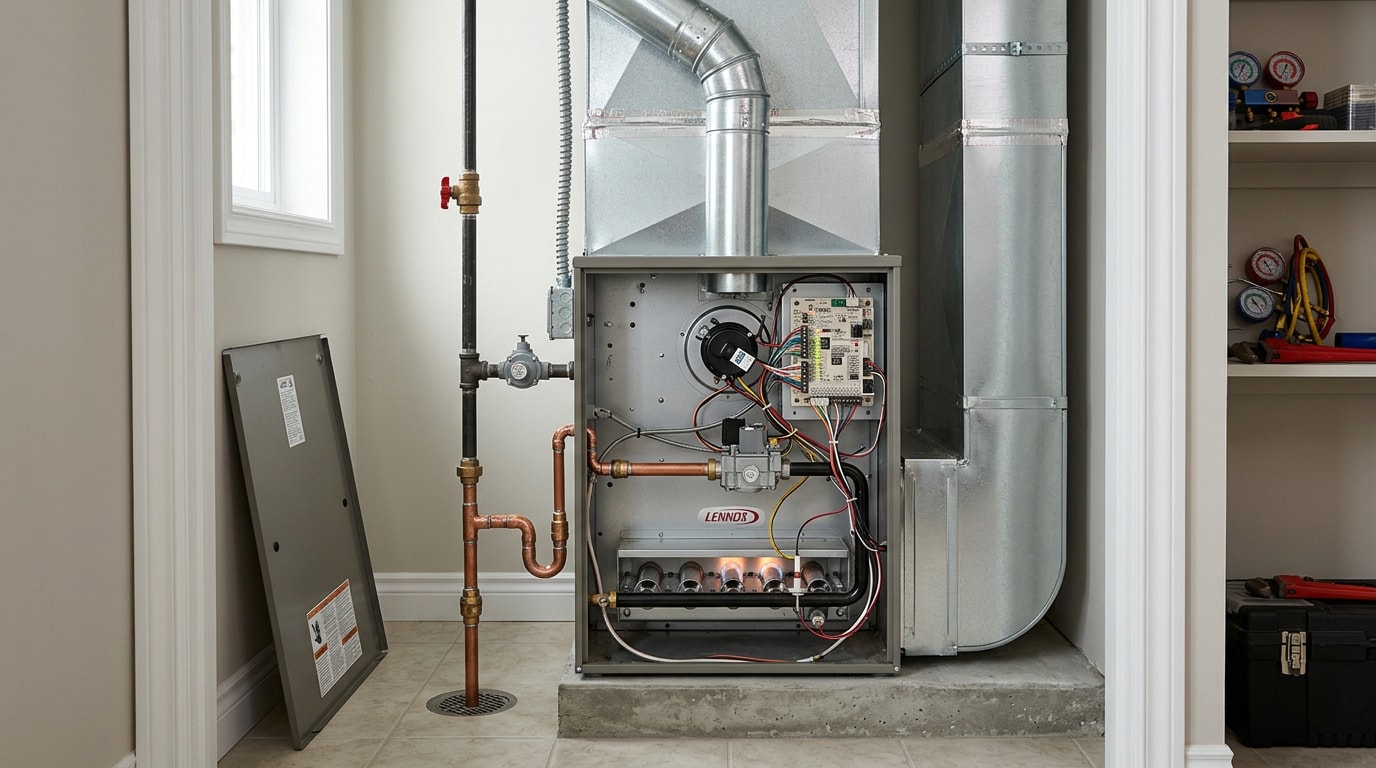
Once a furnace ignites, the flame sensor confirms the burners are actually lit. A sensor coated in carbon residue can't detect the flame. The control board cuts the gas valve within seconds as a precaution. This is the classic pattern where the furnace fires up, then shuts off almost immediately.
Cleaning it is a straightforward fix for a comfortable DIYer:
- Power down the furnace completely at the switch and breaker.
- Locate the sensor, a thin metal rod near the burner assembly.
- Gently clean it with fine steel wool or a Scotch-Brite pad. Avoid aggressive sanding, which can damage the sensing surface.
- Reinstall it, restore power, and run a full heating cycle to test.
Thermostat Problems and Settings
Confirm the system is set to Heat, the setpoint is above room temperature, and the batteries aren't low. On smart thermostats, check that Eco mode, Away mode, or a hidden "safety temperature" limit isn't quietly cutting runtime short.
A misread room temperature changes how often the system cycles on and off. If the furnace keeps shutting off at odd intervals that don't match the setpoint, the thermostat itself, not the furnace, may be the real problem. A thermostat mounted near a sunny window, a heat register, or a lamp can read the room as warmer than it is and shut the system off too soon.
Pressure Switch, Draft Inducer, and Condensate Drain Issues
High-efficiency condensing furnaces produce water vapor that has to drain out through a condensate line. A clogged trap or a frozen drain line, common during Pueblo County cold snaps, can back up and trip the pressure switch mid-cycle. Clear any kinks, drain the trap, and thaw frozen sections before restarting.
The pressure switch and draft inducer motor work together to confirm safe venting before ignition even starts. If the inducer doesn't spin up long enough, or the switch never closes because of a blocked vent or a wiring fault, the furnace begins its startup sequence and then shuts down within seconds. It's a pattern that's easy to mistake for an ignition problem.
Overheating and Limit Switch Shutdowns
The limit switch exists to protect the furnace from overheating. A weak blower motor or a dirty filter restricting airflow can trigger it early, causing repeated short cycling even when nothing else is technically broken.
Some overheating signs point to something more serious. A strong gas odor, rust or soot around the burners, or a carbon monoxide detector going off can signal a cracked heat exchanger, which is a safety issue, not a simple repair. Cracked heat exchangers let combustion gases leak into the air your home breathes. The most common symptoms of CO poisoning are headache, dizziness, weakness, upset stomach, vomiting, chest pain, and confusion, often described as flu-like. If anyone in the house notices those symptoms near the furnace, get outside immediately and call for help from a safe location. Don't troubleshoot this one yourself.
DIY Troubleshooting Checklist
Run through this quick list before scheduling a service call:
- Check the furnace's power switch and the breaker. Reset it once; if it trips again, stop resetting and call a technician.
- Note any blinking error code on the control board. Most manufacturers use it to point to a specific fault.
- Walk the house and open any closed supply vents.
- Make sure return air grilles aren't blocked by furniture or rugs.
These last two steps fix airflow-related short cycling surprisingly often. Browse our full lineup of furnace repair services if any of the checks above reveal a bigger issue. If everything on this list checks out and the furnace still shuts down early, it's time to call someone who can test the system properly. For a deeper diagnostic beyond the basics, our furnace diagnostics and safety inspection service checks combustion, pressure switches, and venting with the right equipment.
If your home runs on electric heat instead of gas, the failure pattern looks different. See our guide on an electric furnace not blowing hot air for that specific troubleshooting path.
When to Call a Professional
Some fixes require licensed hands. Combustion analysis, gas valve adjustments, and pressure switch calibration aren't safe DIY territory. Burnt wiring, melted plastic components, or repeated rollout and limit trips mean it's time to stop resetting the furnace and call a pro.
Continuing to reset a furnace that's tripping a safety lockout wastes time and risks turning a minor repair into a bigger one. Winter demand in Pueblo County Northside means same-day appointments aren't always guaranteed once a cold snap hits, so booking early helps. When you're ready, get a free estimate and we'll get it sorted before the next freeze.
This guide reflects field calls our techs answer across Pueblo County Northside every heating season, from Bessemer to Eagleridge. Our lead technicians hold NATE certification and work on gas furnaces, heat pumps, and swamp coolers throughout the area. Questions about your specific system? Contact Iron Ridge Heating and a real technician will walk through it with you.
FAQ
Why does my furnace keep turning on and off?
It's usually short cycling: the system starts, runs briefly, shuts down, then restarts before the house reaches a steady temperature. Airflow problems, thermostat issues, dirty filters, and safety features reacting to overheating are the most common causes.
Is short cycling bad for my furnace?
Yes. Even if the furnace still produces some heat between cycles, short cycling stresses the system. Every startup draws extra energy and adds wear to the blower motor, ignition components, and control board over time.
Can a dirty air filter cause my furnace to short cycle?
Yes, it's one of the leading causes. A dirty filter restricts airflow, which causes the heat exchanger to overheat, and the safety limit switch then shuts the furnace down to prevent further damage.
Why does my furnace keep shutting off before reaching temperature?
This usually points to overheating from restricted airflow, such as a clogged filter or blocked vents, or to a faulty flame sensor. The furnace shuts down as a built-in safety precaution before the home reaches the target temperature.
Can a bad thermostat cause my furnace to short cycle?
Yes. A thermostat with low batteries, faulty wiring, or poor placement near a heat source or sunny window can misread the room temperature and signal the furnace to shut off too early or cycle more often than it should.
Should I turn my furnace off if it keeps short cycling?
If it's tripping a safety lockout repeatedly, stop resetting it and shut it off until a technician can check the pressure switch, flame sensor, and heat exchanger. Repeated resets can mask a developing safety issue instead of fixing it.
Short cycling almost never fixes itself, and ignoring it through a Pueblo County Northside winter is how a simple filter problem turns into an overnight no-heat emergency. Start with the filter and thermostat, work down the list, and if the furnace still won't hold a cycle, schedule a visit with Iron Ridge Heating before the next cold front rolls in.