An electric boiler for radiant heat in Pueblo County is usually the easiest way to add hydronic warmth to a home that has no gas line nearby, whether that's a new slab, a finished basement, or an addition. These units heat water instead of air, and that single difference changes how a room feels and how the monthly bill behaves. Here's what the tradeoff actually costs, where it fits, and how to size one before you sign a contract.
What Is an Electric Boiler for Radiant Heat?
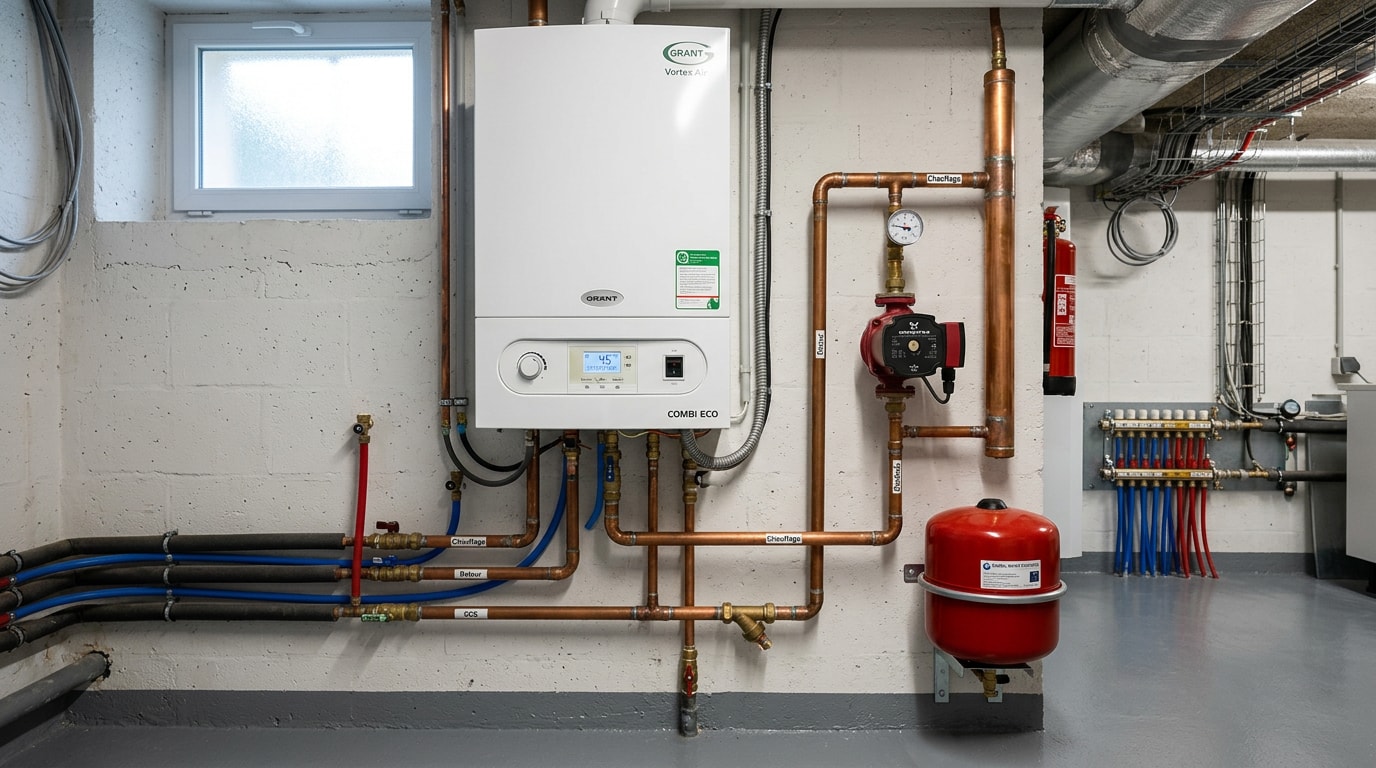
An electric boiler is a compact, tank-style unit that uses electric resistance elements to heat water. That heated water circulates through PEX tubing embedded in a floor, a wall panel, or a baseboard loop.
A furnace heats air and pushes it through ducts. A boiler heats water and sends it through pipes. That's the core difference, and it's why hydronic systems feel different from forced air: the floor and the objects in a room warm up directly, instead of air blowing past you and rising toward the ceiling.
If you're comparing a new system against a repair or replacement of an existing one, a heating equipment supplier who stocks both electric and gas-fired boilers can walk through what fits your mechanical room and electrical panel.
Electric Boiler Costs in Pueblo County
Cost breaks into two separate questions: what it costs to install, and what it costs to run every month. Both matter before you commit to radiant heat.
Installed Cost
Installed cost is driven mainly by boiler size (kW), the complexity of the PEX layout, and whether your electrical panel needs an upgrade to handle the added load.
| System Type | Typical Installed Cost | Best Fit |
|---|---|---|
| Electric boiler, single zone (small addition or ADU) | $4,500 to $7,500 | Additions, converted basements, small all-electric homes |
| Electric boiler, multi-zone whole-home | $9,000 to $18,000 | Mid-size homes without gas access |
| Gas condensing boiler, multi-zone | $9,000 to $15,000 | Homes with existing gas service |
| Electric cable/mat, single room only | $1,200 to $4,000 | Bathrooms, mudrooms, small retrofits |
These are general installed-cost ranges, not a quote. Panel upgrades, slab prep, and zoning complexity move the number in either direction, so a site visit still beats any chart.
Monthly Running Cost
Running cost comes down to three numbers: the boiler's kW rating, how many hours it runs per day, and your electricity rate. The formula is simple: kW used × hours run × rate per kWh gives a daily estimate you can scale to a monthly bill.
Colorado's average statewide retail electricity price was 12.07 cents per kWh in 2024 , according to the U.S. Energy Information Administration's state electricity profile, though actual residential rates from your utility will typically run higher once delivery charges and seasonal adjustments are included. Black Hills Energy is the electric utility serving most of Pueblo County, and rates there have moved in both directions over the past two years, so it's worth checking a recent bill before assuming a specific cents-per-kWh figure.
For a small zone, say a 6 kW boiler running 6 hours a day during the coldest stretch of winter, that math typically lands in the range of a few dollars a day. A larger, whole-home electric boiler in a drafty house can push well past that. Compared to gas, electric resistance heat generally costs more per unit of delivered heat in most of Colorado, though that gap narrows fast in a small, tightly insulated space.
Ready to see real numbers for your house? Request a free estimate and we'll run the load calculation instead of guessing from a chart.
Pros and Cons of an Electric Boiler for Radiant Heat
Every heat source involves tradeoffs. Here's where electric boilers genuinely shine, and where they fall short.
Pros
- Quiet operation: no blower motor or burner noise, just a small circulator pump
- Even heat distribution across a room instead of the hot-cold cycling common with forced air
- No venting or flue required since there's no combustion byproduct to exhaust
- Compact footprint, often not much larger than a water heater
- Simple to zone, so you can heat only the rooms in use
Cons
- Higher running cost than gas in larger or poorly insulated homes
- Requires enough electrical panel capacity, which can mean an upgrade in older houses
- No heat during a power outage unless paired with a generator or battery backup
- Best suited to smaller or well-insulated homes rather than large, leaky ones
Homeowners who want to cut long-term operating risk sometimes pair an electric boiler install with broader energy-efficiency system upgrades, since better insulation and air sealing shrink the kWh the boiler has to deliver in the first place.
When Does an Electric Boiler Make Sense for a Pueblo County Home?
Electric boilers tend to make the most sense in smaller, well-insulated homes, additions without existing gas lines, and all-electric new construction. They also work well as a supplemental or zoned heat source paired with a primary system.
Pueblo's climate adds a local wrinkle. Heating degree days in Pueblo totaled 4,871 in 2025, running about 463 below the 1991-2020 normal of 5,334 , based on the National Weather Service's annual climate summary for the area. That's a milder heating season than most of Colorado's mountain communities, but it still demands a reliable cold-weather heat source for several months a year, and a boiler sized off a national average instead of local degree-day data is a common sizing mistake.
In our own service calls across Pueblo County, electric boilers show up almost exclusively in additions, finished basements, and small all-electric builds, rarely as a whole-house primary system in an older, larger home. That pattern lines up with the national guidance: small footprint, good insulation, no gas line nearby.
Because electricity rates and gas access vary by neighborhood, the right answer depends on your lot, your insulation level, and your square footage, not a rule of thumb. If you're weighing options for a specific property in Pueblo County, our related guide on floor heating systems covers how homeowners in the region are approaching similar decisions.
Electric vs. Hydronic Radiant Floor Heating: Which Fits Your Home?
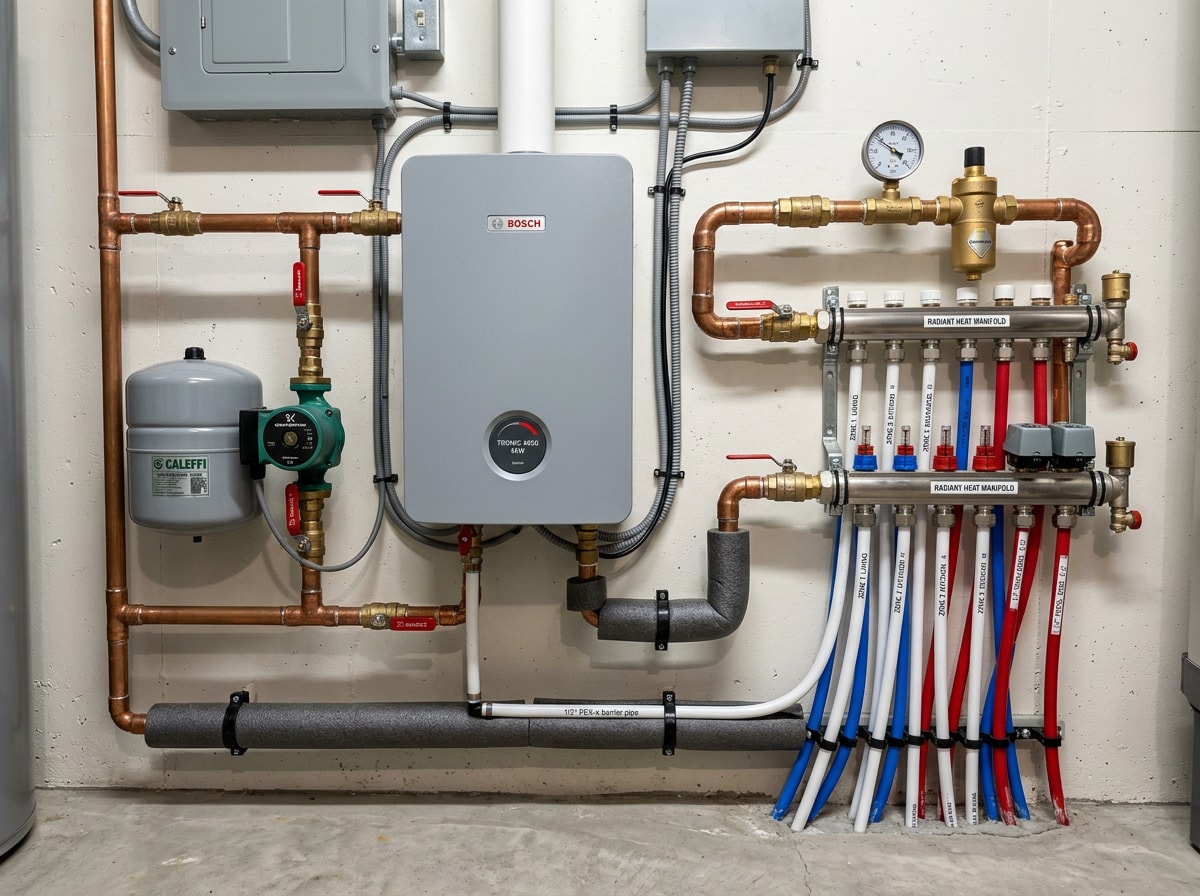
Many Pueblo County homeowners aren't actually choosing between electric and gas. They're choosing between two electric options: electric-cable radiant mats and electric-boiler-driven hydronic radiant.
| Factor | Electric Cable/Mat | Electric Boiler (Hydronic) |
|---|---|---|
| Upfront cost | Lower for single rooms | Higher, but scales across zones |
| Whole-home feasibility | Difficult to extend | Built for multi-zone coverage |
| Can feed radiators/towel warmers | No | Yes |
| Moving parts | None | Pump, expansion tank |
| Typical lifespan | 20 to 25 years | 15 to 20 years (boiler); tubing lasts decades |
Cable systems cost less upfront for a single bathroom or mudroom but are hard to extend to whole-home heating. Electric boiler hydronic systems cost more to install but scale better across multiple zones, and the same loop can double as a heat source for towel warmers or a radiator. For most full-home or multi-room installations, heating system installation built around a boiler offers more flexibility than cable alone.
Choosing the Right Boiler Size for Radiant Floor Heating
Boiler selection should start with a heat-loss calculation for the home, not a square-footage guess. That number drives sizing, tubing layout, and whether electric or gas-fired condensing is the better fit.
Radiant floors run at lower supply water temperatures than baseboard or forced-air coils, which is the sweet spot where condensing gas boilers hit their highest efficiency. ENERGY STAR certified gas boilers carry AFUE ratings of 90% or greater, about 6% more efficient than the federal minimum , which is a useful benchmark when comparing quotes on the gas side.
Electric boilers don't condense in the same sense since there's no combustion and no flue gas to recover heat from, but the low-temperature compatibility still matters: an oversized boiler of either fuel type short-cycles and wastes energy. A proper load calculation, paired with thermostat installation that supports zone control, keeps either system running efficiently instead of cycling on and off all day.
Installation itself touches both plumbing and electrical code. A dedicated 240-volt circuit sized for the boiler's full load isn't a reasonable do-it-yourself project for most homeowners; licensed installers handle permitting and wire to the standards maintained in the National Electrical Code.
Is Electric Radiant Heat Worth It in 2026?
Electric radiant heat is worth it when a home is smaller, well-insulated, and either lacks gas access or is being built all-electric from the start. It's a weaker value proposition for large, drafty homes where electricity costs add up fast across a long heating season.
The decision comes down to three factors: your home's size and insulation, your local electricity rate, and whether you need whole-home coverage or just a zone. Homeowners who check those three boxes in their favor tend to be glad they went electric. Those who don't may find a gas-fired or hybrid system pencils out better over the system's lifespan.
The team at Iron Ridge Heating and Air has sized and installed hydronic systems across Pueblo County long enough to know that a quick phone estimate rarely beats a site visit. If you're still weighing options, get a free estimate and we'll turn these general guidelines into numbers specific to your house.
FAQ
What size electric boiler do I need for radiant floor heating?
Size it off a room-by-room heat-loss calculation, not square footage alone. Insulation, window area, and ceiling height all shift the number, and skipping this step is the most common cause of an oversized or undersized unit.
Can I install an electric boiler myself?
No. Electric boiler installation involves both electrical and plumbing code requirements, so it isn't a reasonable DIY project for most homeowners. A licensed installer handles permitting and wiring to code.
What is the best boiler for radiant floor heat?
There's no single best type. It depends on fuel availability, home size, and budget. Condensing gas boilers often win on operating cost for larger homes, while electric boilers are the simpler, lower-upfront-cost choice for smaller or all-electric properties.
Is radiant floor heating cheaper to run than forced air?
Often, yes. Radiant heat avoids duct leakage losses and warms objects directly instead of air that stratifies near the ceiling. Actual savings still depend on the heat source, insulation, and local energy rates.
Does radiant floor heating increase home value?
It's generally viewed as a desirable upgrade, particularly in colder regions, though the exact effect on resale value varies by market and buyer expectations.
How much does an electric boiler cost to run per month in Pueblo County?
For a small, well-insulated zone, expect somewhere in the range of $40 to $120 a month during peak winter, scaling up for larger spaces or colder stretches. A whole-home electric system in a larger or less insulated house can run considerably higher. Your actual bill depends on boiler size, run hours, and your rate from Black Hills Energy.
Will an electric boiler keep working during a power outage?
No, not without a backup power source. Since the unit runs on electric resistance elements and a circulator pump, a power outage stops both heat production and water circulation. A generator or battery backup is the only way around this.