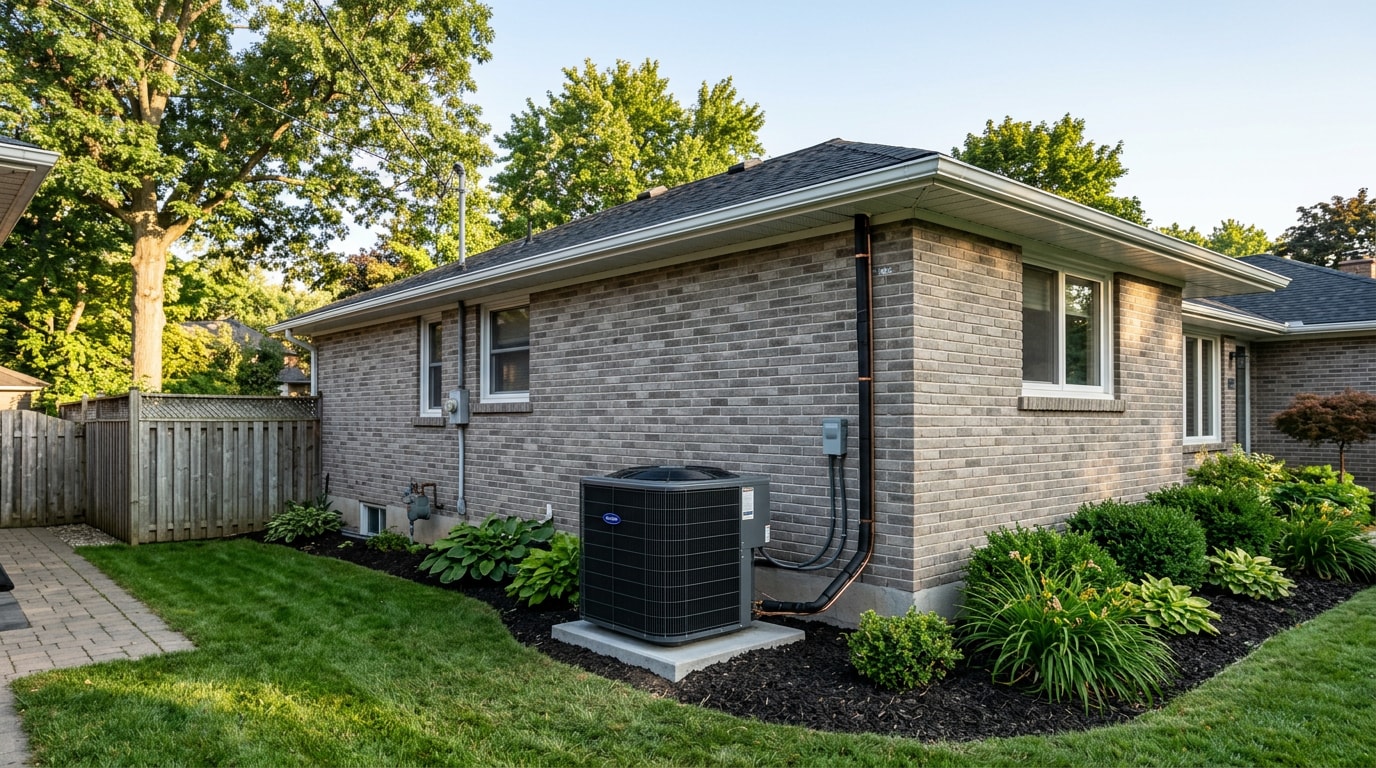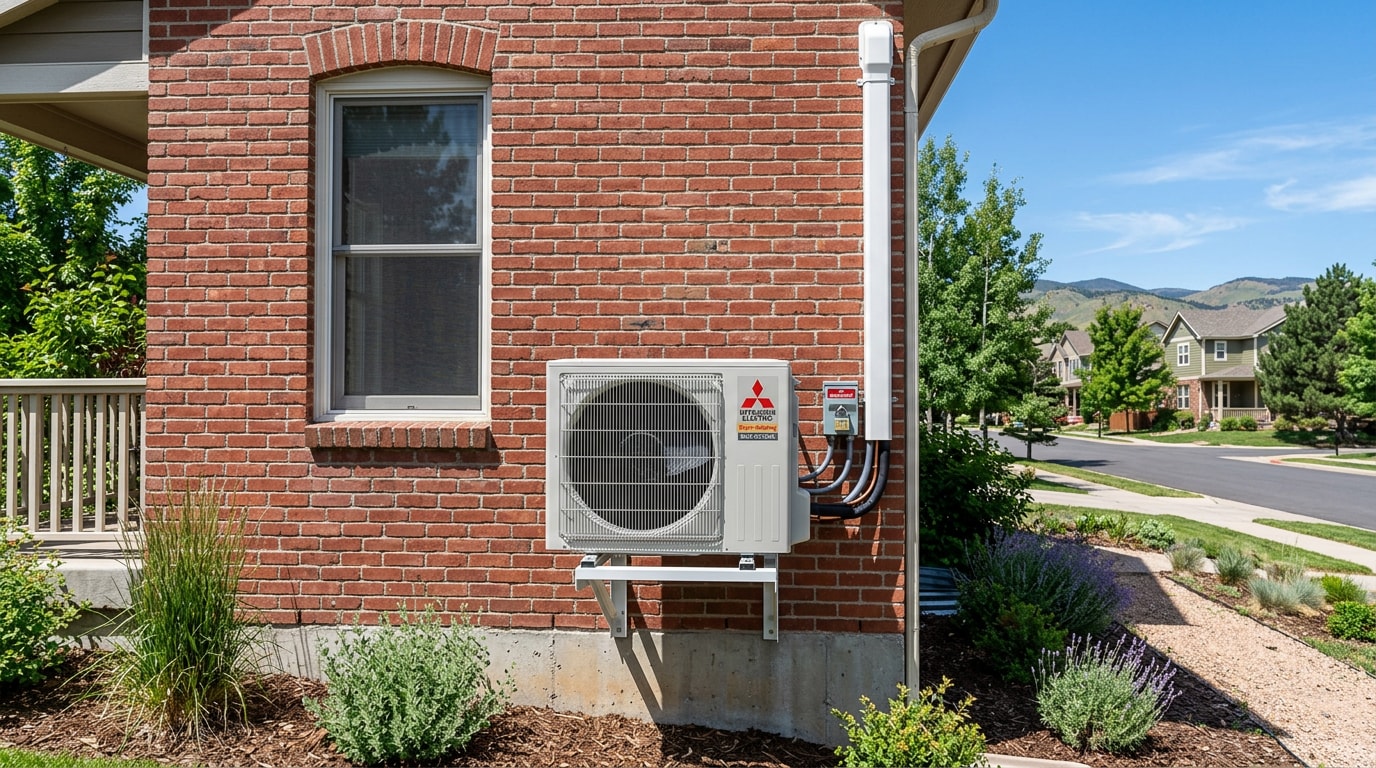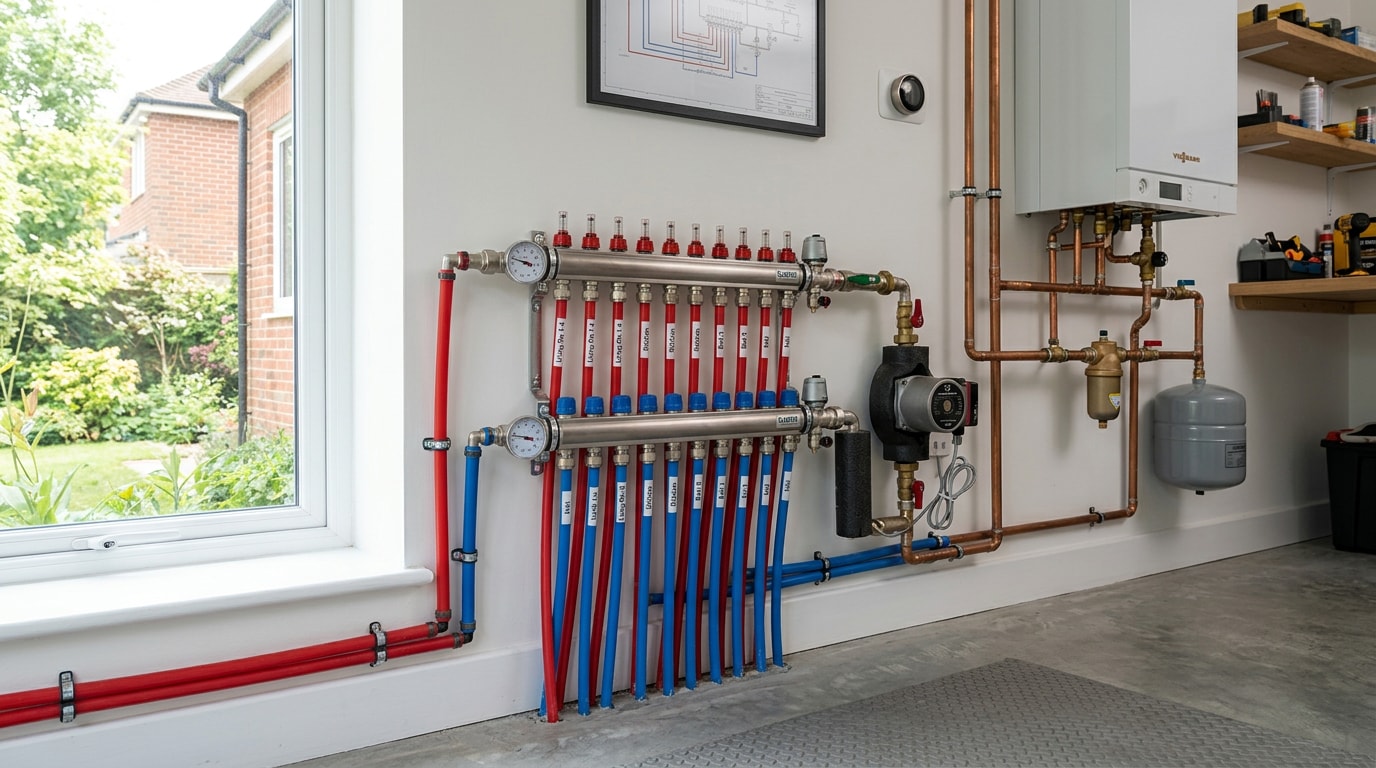
A floor heating system in Canon City, CO can fix the one thing forced air never quite solves: cold tile and hardwood floors in a house with a furnace that's already running. Fremont County winters are long enough that many homeowners outgrow the "just turn the thermostat up" approach. Here's how radiant heat actually works, what it costs in 2026, and how to tell if it's worth it for your house.
What Is a Floor Heating System & How Does It Work?
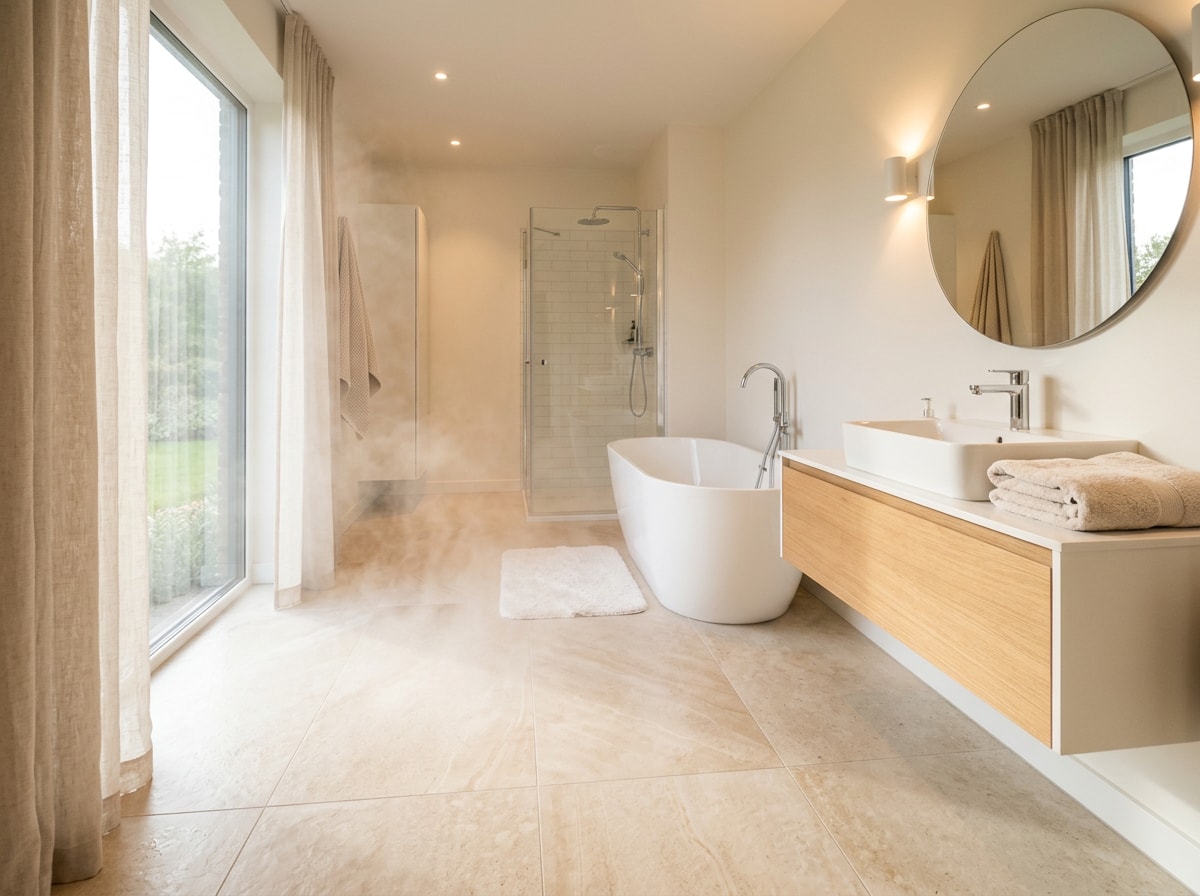
A floor heating system, also called radiant heat, warms a room by heating the floor surface itself instead of blowing heated air through vents. Tubing or electric cabling runs beneath the flooring. As it warms, heat radiates upward into the room, warming people and objects directly rather than just the air around them.
The heat source varies by system type. It can be a boiler, a dedicated water heater, a heat pump, or an electric element. The path is simple: the floor warms first, that warmth radiates into the room, and then it transfers to anything, or anyone, in the space.
The U.S. Department of Energy notes that radiant heating is more efficient than baseboard heating and usually more efficient than forced-air heating because it eliminates duct losses, and that people with allergies often prefer it because it doesn't distribute allergens the way forced-air systems can . For homeowners weighing the switch, that's a meaningful data point straight from the agency that tracks residential energy use nationally. You can read the full breakdown on the Department of Energy's radiant heating page.
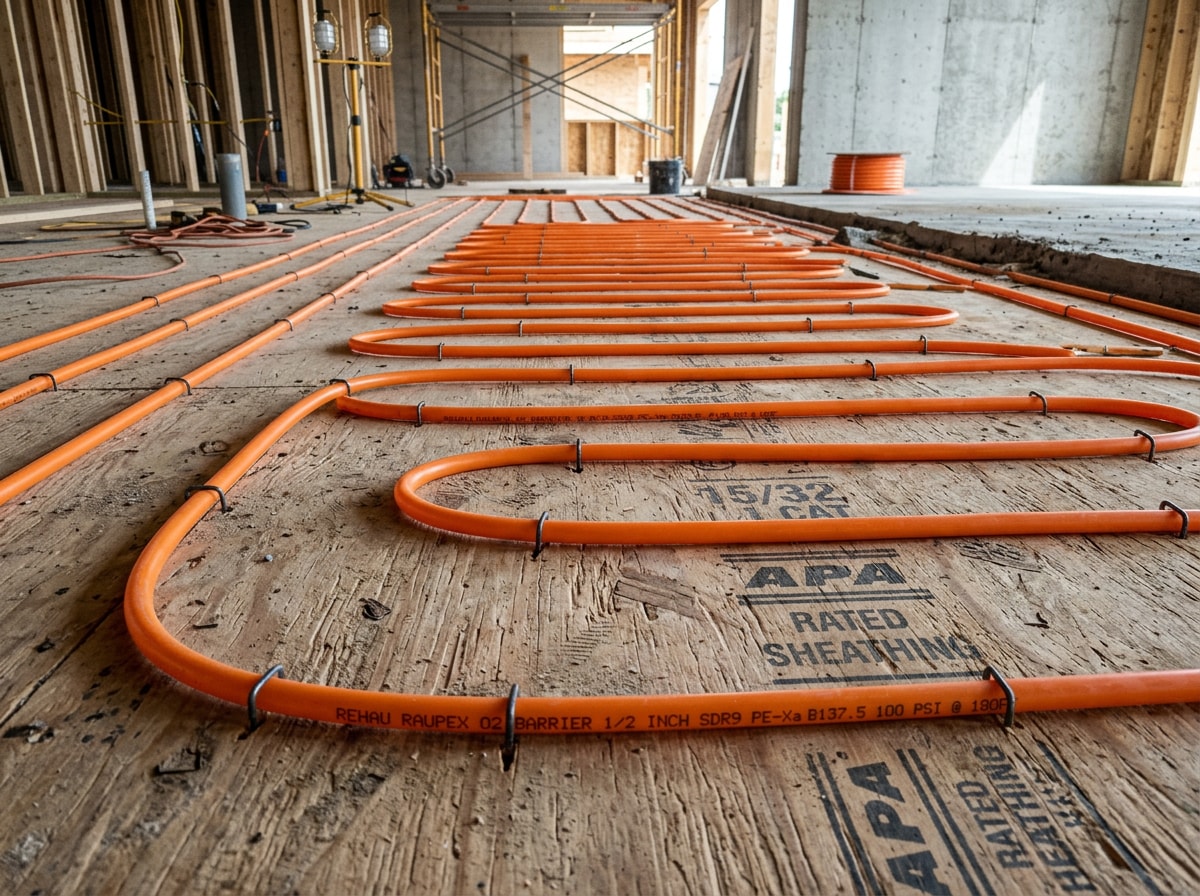
Hydronic vs. Electric Floor Heating: Which Type Fits Your Home?
Floor heating systems fall into two categories, and the right one depends on project size and how the space gets used.
| Feature | Hydronic (Water) | Electric |
|---|---|---|
| Heat source | Boiler or water heater, circulated through PEX tubing | Electric cables or mats wired to a thermostat |
| Best for | Whole-house heating, new construction, major remodels | Single rooms like bathrooms, kitchens, mudrooms |
| Install complexity | Higher, requires a manifold and zoning | Lower, mats can go under tile or stone directly |
| Running cost at scale | Lower per square foot as area grows | Higher per square foot over large areas |
Hydronic systems circulate heated water through a network of PEX tubing, with a boiler or dedicated water heater supplying hot water and a manifold controlling flow to different zones. Because it covers large areas efficiently, hydronic radiant heat is the more common choice for whole-house heating in new builds or major remodels.
Electric systems use thin heating cables or mats installed just under the finished flooring. They're typically used in smaller areas, bathroom floors being the most common example, where running a full hydronic loop wouldn't make sense. Installation is simpler and faster than hydronic, though electric heat generally costs more to run over large square footage.
Not sure which fits your layout? Our HVAC contractor team can walk through both options for your specific floor plan.
Benefits and Drawbacks of a Floor Heating System
Like any comfort upgrade, radiant floor heating has clear advantages and a few tradeoffs worth weighing before you commit.
Benefits:
- Even heat across the entire room instead of hot and cold spots near vents
- No blower noise and no drafts from supply registers
- Less circulated dust compared to forced air, which matters in a dry, dusty climate
- No visible radiators or ductwork, which frees up room design
- Solves the specific problem of cold tile or hardwood floors in older homes
Upgrading furnace and HVAC filters is one of the main ways homes reduce indoor particulate matter, since routine filter changes directly affect how much dust circulates through a central system , according to the EPA's guidance on indoor particulate sources. A radiant system sidesteps that issue entirely because there's no ductwork moving air (and dust) around the house in the first place.
Drawbacks:
- Higher upfront cost than a comparable forced-air or baseboard system
- Hydronic setups need a boiler, manifold, and tubing network, which adds complexity
- Radiant systems add a small amount of floor height, since tubing or mats sit beneath the finished flooring
- Slower to respond to temperature changes than forced air (more on that in the FAQ below)
What Does a Floor Heating System Cost in Canon City, CO?
Cost depends on three things: square footage, the flooring material going on top, and whether the project is new construction or a retrofit into an existing home. Retrofits typically cost more than installing radiant heat during a new build, since existing flooring often has to come up first.
| Project Type | Typical Cost Range (2026) |
|---|---|
| Electric, single room (bathroom-size) | $1,500 to $6,000 installed |
| Electric, per square foot | $8 to $20 |
| Hydronic, per square foot | $12 to $35 |
| Whole-house hydronic (new construction) | $13,000 to $48,000 |
| Average project cost nationally | Around $4,000 |
| Monthly operating cost, whole home | Roughly $65 to $250 |
These are national ranges, and your actual number depends on home size, insulation quality, and local labor rates. When our crew scopes a hydronic retrofit in a Fremont County home, the first step is a room-by-room heat-loss calculation rather than a flat per-square-foot quote, since two similarly sized houses can need very different output depending on window age and insulation.
The Radiant Professionals Alliance, the trade association for the radiant and hydronic industry, is a good resource if you want to dig into how codes and installation standards are set for these systems.
Want an accurate number for your house instead of a national range? Get a free estimate and we'll measure your space and current heat source before quoting anything.
Is a Floor Heating System Worth It for Your Canon City Home?
Over time, a floor heating system tends to pay off through consistent comfort, lower energy waste, and resale appeal, buyers notice warm floors immediately during a winter showing. The real question is how long you plan to stay in the home and how well your current system is already performing.
Canon City sits at roughly 5,300 feet in a high-desert climate with cold winters and wide day-to-night temperature swings. Older homes in Fremont County with single-pane windows and minimal insulation often struggle to heat evenly with forced air alone. Radiant heat addresses that directly instead of just compensating for heat loss with a bigger furnace.
If you're also considering simpler zone heating options, our guide on how baseboard heaters work breaks down a lower-cost alternative worth comparing before you decide. For efficiency upgrades beyond radiant heat, see our energy-efficiency system upgrade options.
Check our Canon City service area page to confirm radiant heat installation and service is available for your neighborhood.
FAQ
Does Radiant Floor Heating Work in Colorado Winters?
Yes, when it's properly sized and the home has adequate insulation. Cold, high-altitude climates like Canon City's need accurate heat-loss calculations so the system can keep pace during the coldest stretches of the season.
What Flooring Works Best with Radiant Floor Heating?
Tile, stone, and engineered wood conduct heat efficiently and pair well with radiant systems. Some luxury vinyl plank and certain carpets also work, but they may need manufacturer-approved temperature limits, so confirm compatibility before installation.
How Long Does Radiant Floor Heating Take to Warm Up?
Radiant systems warm up more slowly than forced air because the floor mass has to heat first, an effect called thermal lag. A programmable or smart thermostat that pre-heats on a schedule helps manage this so rooms are warm when you need them.
Can I Have Both Radiant Heat and Central Air Conditioning?
Yes. Radiant floor heating only heats, so it pairs easily with central air conditioning or a ductless mini-split for cooling. Many homes run radiant heat in winter and a separate cooling system in summer without any conflict.
Is Radiant Floor Heating Expensive to Operate?
Despite a higher installation cost, operating cost is generally lower than forced air because less energy is lost through ductwork. Monthly cost still depends on insulation quality, local climate, and whether the system runs on gas, electricity, or another fuel source.
How Long Does a Floor Heating System Last?
Hydronic PEX tubing typically lasts 35 to 50 years when installed correctly, often outlasting the boiler or water heater that supplies it. Electric mats and cables generally last 20 to 30 years. The thermostat and any mechanical components (pumps, valves) usually need service or replacement well before the tubing itself does.
Do I Still Need a Backup Heat Source with Radiant Floor Heating?
Not necessarily, but many homeowners keep one. A correctly sized whole-house hydronic system can serve as the sole heat source. Some homeowners choose to keep an existing furnace as backup during a retrofit rather than remove it, especially in rooms not included in the radiant zone.
Ready to find out what a floor heating system would cost for your specific home? Request a free estimate and we'll put together a plan based on your floor plan and current heating setup. You can also browse recent installs on our projects page or visit our homepage for our full range of heating and cooling services.
About the Author
This guide was written by Derek Mason, a NATE-certified lead technician with Iron Ridge Heating & Air, serving Canon City, Pueblo, and surrounding Fremont County communities. Questions about a specific home or retrofit? Contact our team directly.