An electric furnace not blowing hot air in Rockvale, CO almost always means the blower motor is fine but something downstream isn't letting the heating elements do their job. The fix is usually one of five things: a thermostat setting, a dirty filter, a tripped breaker, a failed sequencer, or a safety switch doing exactly what it's designed to do. Work through the checks below in order and you'll know within 20 minutes whether this is a DIY fix or a call to a technician.
Quick Diagnosis: Match Your Symptom to the Likely Cause
Before you start pulling panels, use this table to narrow down what's actually happening.
| What You're Noticing | Most Likely Cause |
|---|---|
| Blower runs, air is cool or room-temp | Dirty filter triggering a high-limit shutdown, or a sequencer that never activated |
| Lukewarm air, never gets fully hot | One failed heating element or a sequencer stuck on the first stage |
| No heat at all, blower runs fine | Tripped breaker, dead thermostat battery, or sequencer failure |
| Heat starts, then cuts out a few minutes later | High-limit switch tripping from restricted airflow |
| Breaker trips every time you try to run heat | Failing sequencer or a short in the heating element circuit |
This isn't a replacement for a multimeter, but it tells you where to start.
Thermostat Settings to Check First
Before assuming anything is broken, rule out the thermostat. It sounds obvious, but a system accidentally left on Cool or Off, or a fan set to "On" instead of "Auto," are two of the most common reasons homeowners report no warm air at all.
Run through these in order:
- Confirm the mode is set to Heat, not Cool or Off.
- Flip the fan setting to Auto so the blower only runs when the furnace is actively heating.
- Check for dead or weak batteries if your thermostat display looks dim or unresponsive.
- Set the temperature a few degrees above the current room temperature to force a call for heat.
Dead thermostat batteries are a sneaky cause because the furnace itself still has power, but the control signal doesn't reach the heating elements. If your thermostat wiring or compatibility looks suspect after these checks, our furnace repair team can diagnose it over the phone or on-site.
Dirty or Clogged Air Filter
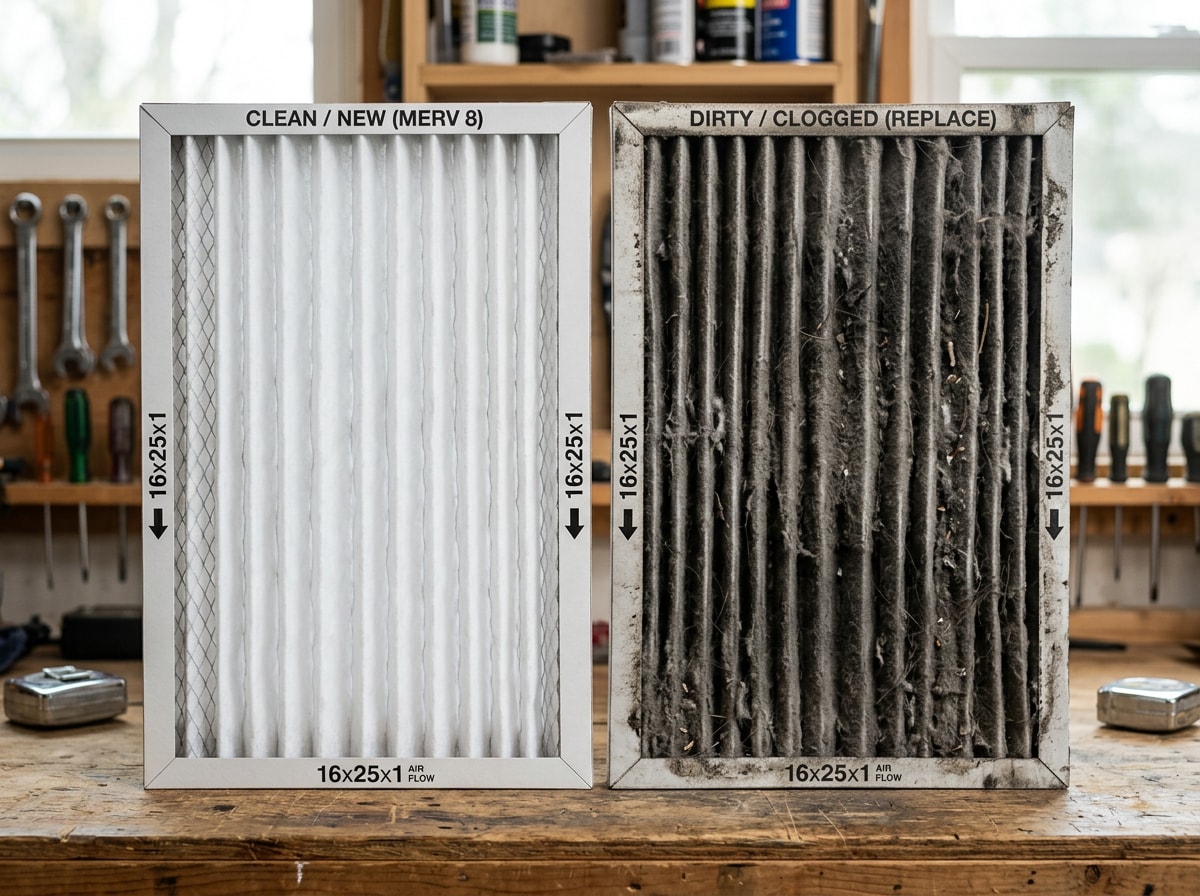
A clogged filter is one of the most frequent causes of an electric furnace blowing cold or lukewarm air, and the mechanism is simple. When the filter restricts airflow, the heating elements overheat, and a built-in safety switch shuts the heat off while the blower keeps spinning.
ENERGY STAR recommends you inspect, clean, or change air filters once a month in your central air conditioner, furnace, and/or heat pump , and change them more often if dirty rather than waiting out a fixed schedule. A quick test: hold the filter up to a bright light. If light doesn't pass through clearly, replace it.
Homes with pets or higher dust levels in Fremont County's dry climate often need monthly swaps rather than the standard 60 to 90 day cycle. If airflow still feels weak after a fresh filter, it's worth having our Airflow Diagnostics team check for duct restrictions or a failing blower component.
Tripped Breaker or Blown Fuse
Electric furnaces draw power through a double-pole breaker, meaning both sides need to trip or reset together. If only one side trips, you can end up with a blower that runs normally while the heating elements get zero power.
These circuits run on 240 volts, which carries enough current to cause serious injury. Switch off power at the furnace disconnect and the breaker panel before touching anything beyond the filter or the breaker itself. The Electrical Safety Foundation International is direct about repeat trips: if your breaker frequently trips, that means it's working, and there's an electrical issue in your home . Resetting a breaker once is reasonable. Resetting it over and over is not, that's a sign of a deeper fault and a job for our Emergency HVAC Repair Services team rather than a DIY project.
Failed Heating Elements and a Bad Sequencer
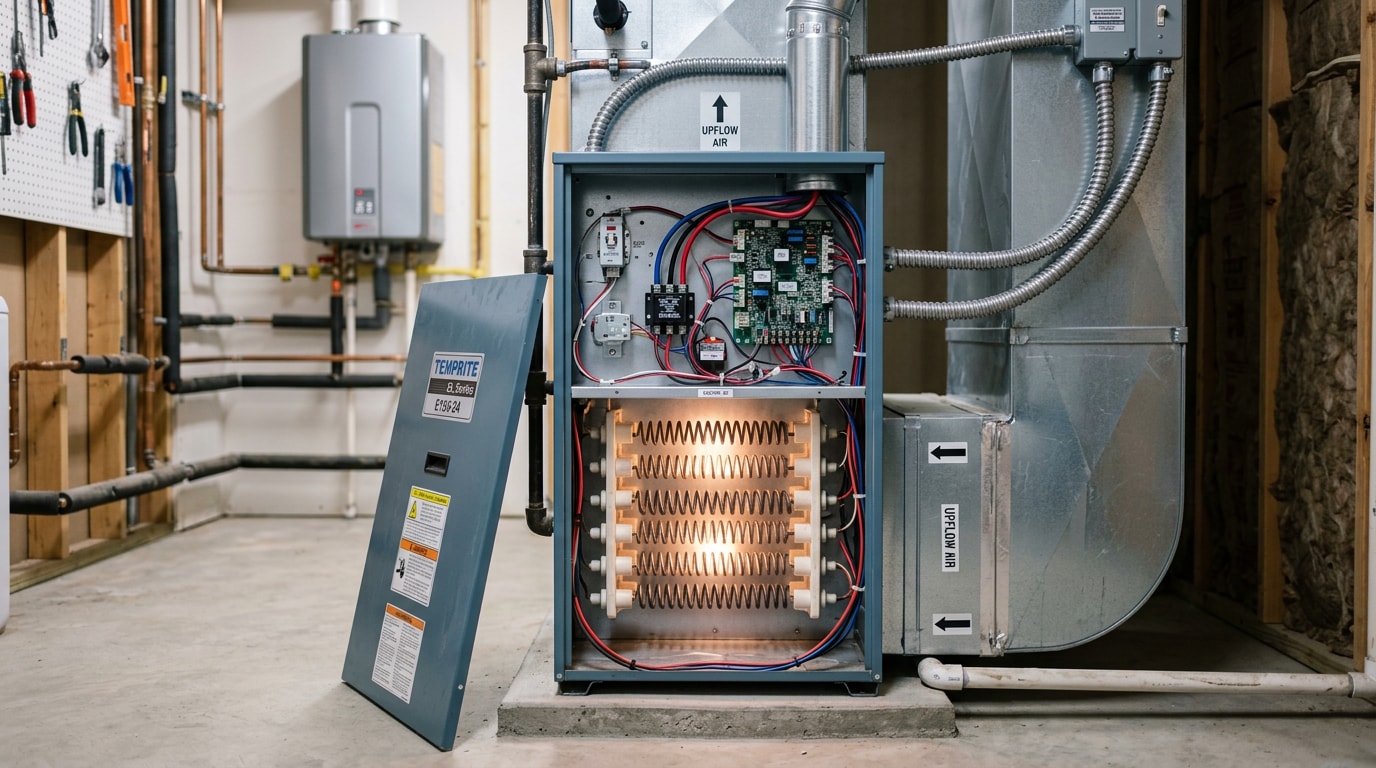
Unlike gas furnaces that fire all at once, electric furnaces bring heat online in stages. A sequencer typically relies on bi-metallic contacts that respond to temperature changes, and when the thermostat calls for heat, the sequencer activates, allowing power to flow through the furnace's heating elements in stages . This staged approach exists because firing every element at once would overload a typical home's electrical panel.
When a sequencer wears out, the symptoms rarely look like a clean on/off failure. More often you'll get:
- Lukewarm air that never climbs to a comfortable temperature
- A delay between the blower starting and warm air arriving
- Elements that activate out of order, or not at all

Carrier's own technical documentation notes that electric furnaces convert essentially all of the electricity delivered to the resistance heating elements into heat , which is why a single bad element is immediately noticeable as a drop in output rather than a gradual decline. Testing a sequencer means working inside a live 240-volt panel, so this is where DIY troubleshooting should stop. In our service calls across Rockvale and the surrounding Fremont County area, a stuck sequencer or a burned-out element is the single most common culprit once the thermostat and filter have already been ruled out.
High-Limit Switch Safety Shutdowns
The high-limit switch is a safety feature, not a malfunction by itself. Crisafulli Bros. explains it plainly: the high-limit switch is a safety feature in furnaces, and if it's tripped, your furnace may start blowing cold air to prevent overheating .
This ties directly back to the filter problem above. Blocked airflow raises element temperatures, the switch senses that heat, and it cuts the heating cycle before anything gets damaged, even though the blower keeps running the whole time. If you've already swapped the filter and the furnace still won't heat, the switch itself may need inspection as part of a full HVAC maintenance and tune-up.
Step-by-Step Checklist Before You Call for Service
Run through this in order, the same sequence a technician follows on arrival:
- Confirm the thermostat is set to Heat with the fan on Auto.
- Check the breaker panel for a tripped double-pole breaker and reset both sides together.
- Replace the filter if it's visibly gray or clogged, then wait 30 minutes for the high-limit switch to reset.
- Walk the house and clear any vents or registers blocked by furniture or rugs.
- Note whether the breaker trips immediately or the furnace runs lukewarm, that detail matters when you call for help.
If every step checks out and you're still cold, homeowners throughout Rockvale, CO and nearby Penrose and Florence deal with the same seasonal swings, so you're not dealing with a one-off issue. It's time for a professional look.
When to Stop Troubleshooting and Call a Pro
Some symptoms call for a stop-and-call approach instead of continued troubleshooting: a breaker that trips repeatedly, any burning smell near the furnace, suspected element failure, sequencer diagnosis, or anything involving internal wiring. These components run at 240 volts, and mishandling them carries real injury risk.
A licensed technician from our HVAC Contractor team has the meters and training to safely test sequencers, elements, and wiring without guesswork. If you're also noticing uneven cooling once summer rolls back around, our post on why AC units freeze up in Northside Pueblo homes covers a related airflow problem worth knowing about.
If your troubleshooting checklist didn't resolve the issue, get a free estimate and we'll get a technician out to your Rockvale home. You can also learn more about our full service lineup on the IronRidge Heating homepage.
FAQ
Why is my electric furnace running but not heating?
It usually points to one of three issues: a clogged air filter causing a high-limit shutdown, a tripped breaker cutting power to the heating elements, or a failed sequencer that never activates the elements. Check those three in order.
Why is my furnace blower running but no heat?
The blower motor has power, but the heating elements don't. This typically traces back to a tripped high-limit switch or a sequencer that isn't sending power to the elements in sequence.
How do you fix a furnace that blows cold air?
First confirm the thermostat is set to Heat, then check for a tripped breaker, then inspect and replace the air filter if needed. If it still blows cold air after these steps, call a licensed technician for sequencer or element testing.
How do I know if my furnace's sequencer is bad?
Watch for lukewarm air that never gets fully hot, a delay before warm air arrives, or a breaker that trips the moment the heat kicks on. Any of these point to a sequencer that isn't staging the heating elements correctly, and it needs a technician to confirm with a multimeter.
How long should an electric furnace take to heat up?
Most electric furnaces start blowing noticeably warm air within a few minutes of a call for heat, since each element energizes in a quick sequence rather than all at once. If it's been running more than 15 minutes with no improvement, stop waiting and start troubleshooting.