How do baseboard heaters work? They pull cool air in at the floor, warm it over a heated element, and release it near the ceiling line, no fan, no ductwork, just a steady convection loop. That simple mechanism is also why so many Coal Creek homes still rely on them in bedrooms, additions, and older houses without a central duct system. Once you understand the loop, spotting a problem (and knowing when it's time to call a technician) gets a lot easier.
What Is a Baseboard Heater?
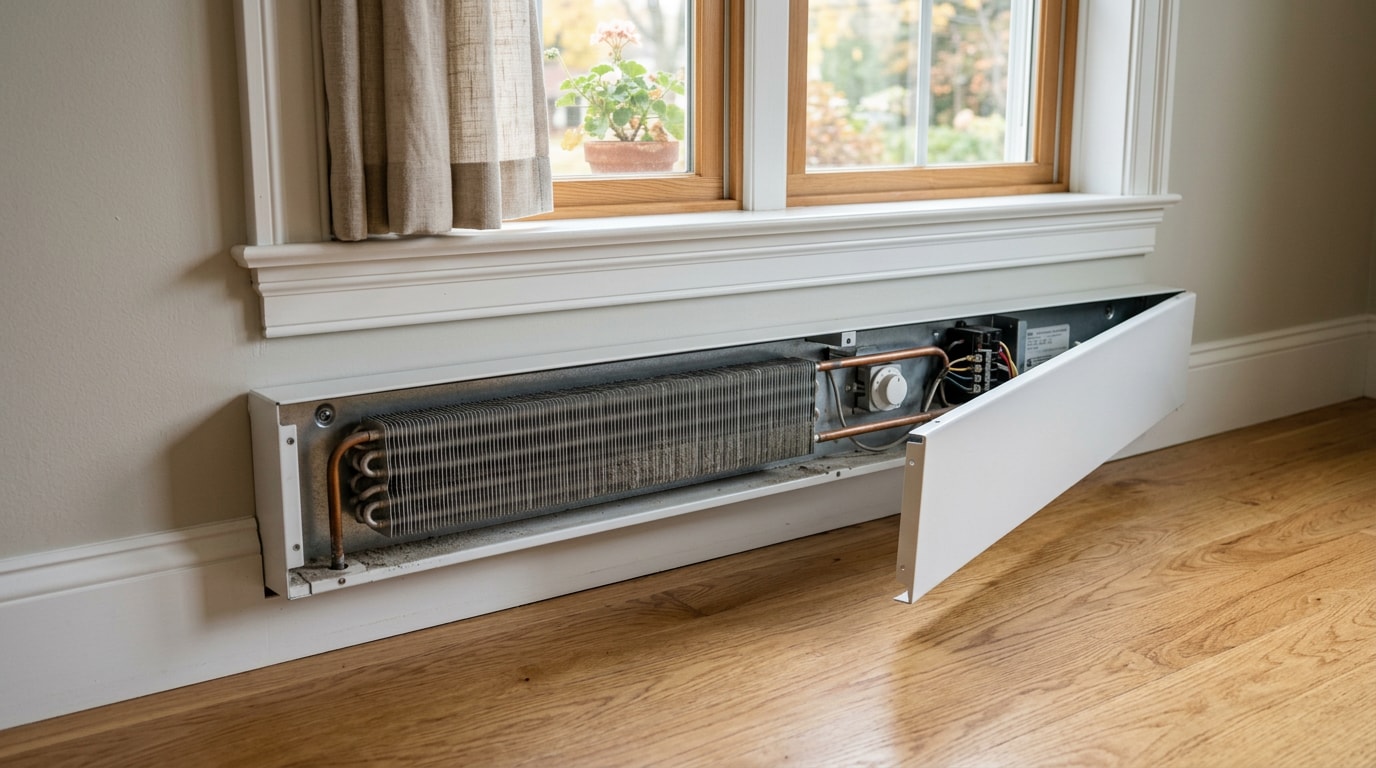
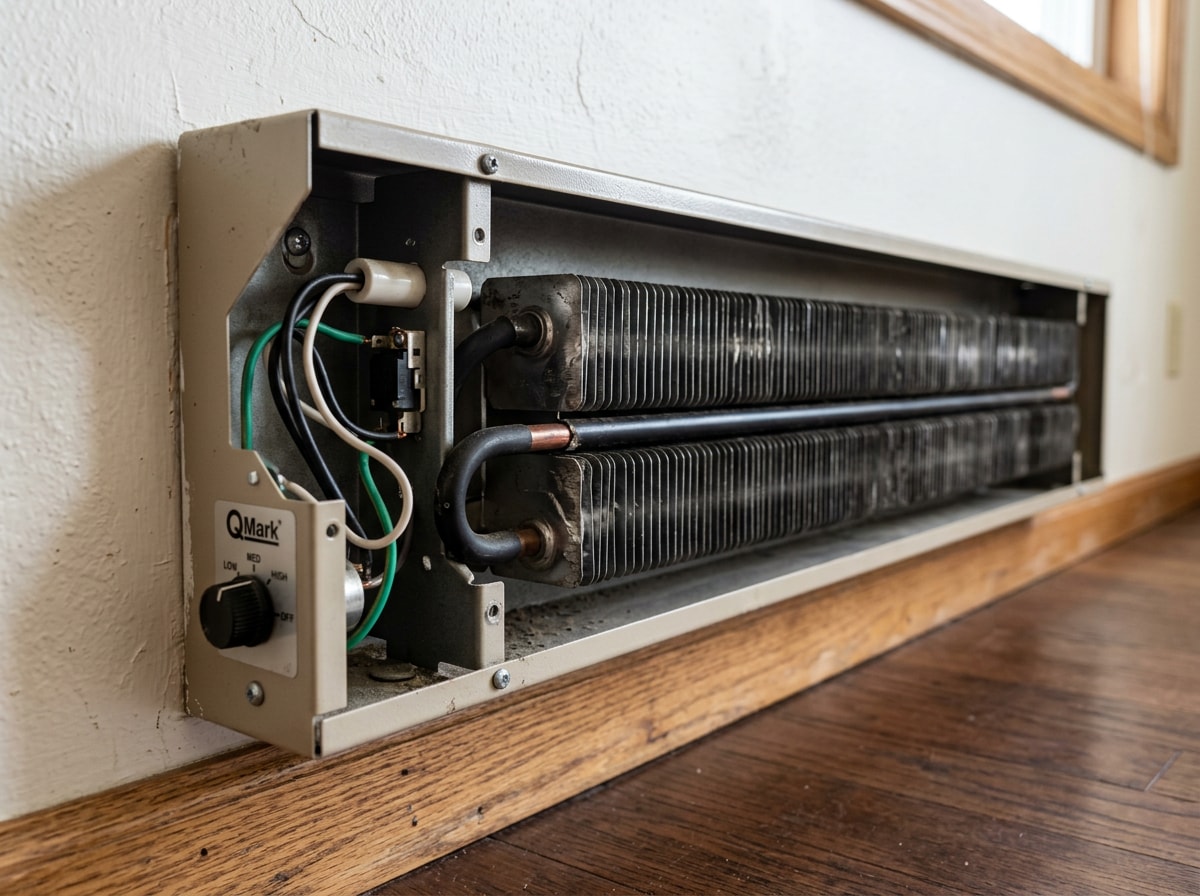
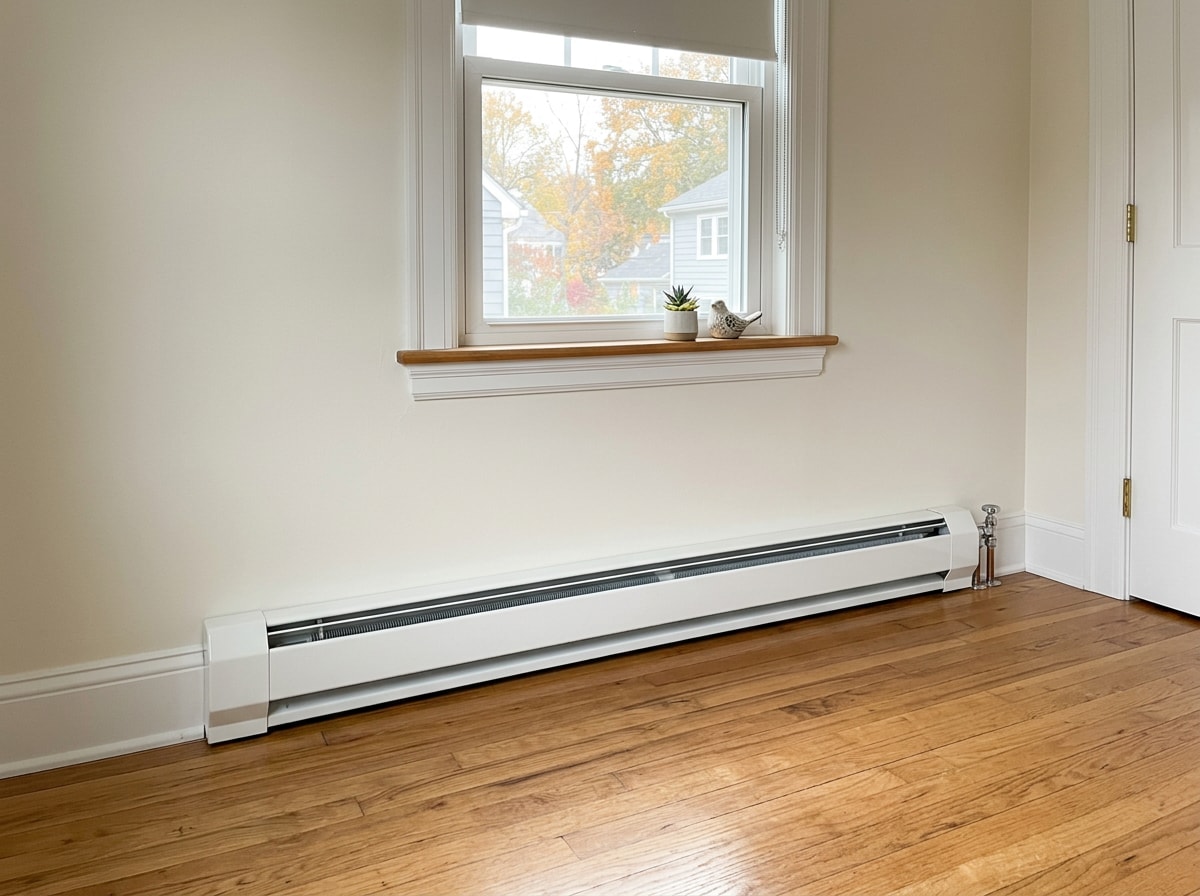
A baseboard heater is a long, narrow unit mounted low on the wall, usually running along the baseboard trim at the room's perimeter. There are two main categories: electric baseboard heaters, which generate heat with an internal resistance element, and hydronic baseboard heaters, which circulate heated water or fluid through a sealed pipe.
Most units sit under windows or along exterior walls, where cold air naturally collects. That placement isn't random. It sets up the convection cycle covered in the next section.
In the field, we typically see four physical variations in Coal Creek and Fremont County homes:
- Hardwired electric units tied to a dedicated circuit
- Plug-in portable electric heaters
- Hydronic (hot water) baseboards connected to a boiler
- Oil-filled portable heaters that mimic baseboard-style convection
If you're deciding which type fits your home, our HVAC contractor team can walk through the options with you.
How Do Baseboard Heaters Work? The Convection Loop
Every baseboard heater, electric or hydronic, relies on one physical principle: natural convection. Cool air is denser, so it sinks toward the floor, enters the heater through a bottom intake, passes over a heated element, and exits through the top vent as warm air rises.
This loop needs no fan or blower to function. It also explains why furniture, curtains, or rugs pushed against a unit choke its output even when nothing inside is actually broken. If the loop can't pull in cool air or release warm air, the element stays hot while the room stays cold.
How Electric Baseboard Heaters Work
Inside an electric baseboard heater, current passes through a metal element and generates heat through electrical resistance. Aluminum fins surrounding the element absorb that heat and transfer it into the passing air.
Most residential units run on a 240-volt circuit, though smaller plug-in models use standard 120V outlets. Because each unit operates independently of a central furnace, electric baseboard heat works well for single rooms, additions, or spaces where extending ductwork isn't practical.
How Hydronic Baseboard Heaters Work
A hydronic baseboard heater circulates hot water, heated by a boiler or a self-contained electric element, through a finned tube running the length of the unit. As water moves through the pipe, the surrounding fins radiate that heat outward into the room.
Because water holds heat longer than metal fins alone, hydronic units stay warm for a while after the heat source shuts off. Electric fins, by contrast, cool down almost as soon as the element stops drawing current.
Electric vs Hydronic: Same Box, Different Heat Source
Both types look similar from across the room, but they behave differently once running.
| Factor | Electric | Hydronic |
|---|---|---|
| Heat-up speed | Fast, often within minutes | Slower, needs water to warm first |
| Heat retention after shutoff | Minimal, cools quickly | Longer, stays warm 20-30+ minutes |
| Typical fin surface temperature | Higher | Milder, steadier |
| Maintenance needs | Low, occasional dusting | Higher, occasional bleeding or valve checks |
Thermostat Control and Zone Heating
Most baseboard heaters are controlled by either a unit-mounted thermostat or a separate wall-mounted line-voltage thermostat. Wall units tend to read room temperature more accurately since they aren't sitting directly next to the heat source.
Day to day, the heater runs until the thermostat senses the room has reached its set point, then shuts off and restarts once the air cools again. Because each unit heats its own room independently, baseboard systems are naturally suited to zone heating, letting you keep occupied rooms warm while cooling down empty ones instead of conditioning the whole house at once.
Benefits of Using Baseboard Heaters
Once you understand the mechanism, the appeal is straightforward. Baseboard heaters run quietly, require no ductwork, and let homeowners manage heat room by room instead of conditioning the whole house at once. Installation costs are also typically lower than adding central ductwork, which is why these units remain common in additions, basements, and older Coal Creek homes.
The tradeoff is operating cost. Electric resistance heat converts nearly all the electricity it draws into usable heat at the point of use, so very little is wasted inside the room. The catch is that generating that electricity in the first place is itself relatively expensive compared to other heat sources, which is part of why electric baseboard heat tends to cost more to run than a furnace or heat pump of similar output.
Common Problems With Baseboard Heaters in Coal Creek Homes
A baseboard heater that isn't heating properly usually points to one of a few familiar culprits:
- Dust buildup on the fins, which restricts heat transfer
- Furniture, curtains, or rugs blocking the bottom intake or top vent
- A thermostat that no longer reads temperature accurately
- In hydronic systems, a leaking valve or trapped air in the line
These are symptoms worth watching for, not a full repair guide on their own. In our service calls across older Coal Creek and Rockvale homes, blocked airflow from furniture pushed up against the unit is the single most common reason a heater runs constantly without ever actually warming the room. If dusting the fins and clearing a few feet of open space in front of the unit doesn't fix it, the issue is likely electrical or mechanical.
Heating equipment fires are also worth taking seriously. Heating equipment caused one in six home structure fires in 2016 to 2020, and space heaters were most often responsible for those heating equipment fires, accounting for most of the related deaths and injuries. Keeping flammable items well clear of any baseboard unit isn't optional.
If you're dealing with a baseboard heater that won't hold a setting or an electric system that keeps tripping its breaker, it's worth comparing notes with our guide on why furnaces won't stay on in Pueblo County Northside, since the diagnostic steps for electrical heating faults overlap. For a hands-on inspection, our furnace diagnostics and safety inspection service covers baseboard-fed hydronic systems as well as furnaces.
When a Baseboard Heater Upgrade Makes Sense
Baseboard heat isn't going anywhere in homes without ductwork, but it's not always the cheapest way to stay warm long term. Today's heat pump can reduce electricity use for heating by approximately 65% compared to electric resistance heating such as furnaces and baseboard heaters , according to the U.S. Department of Energy. For a room-by-room system that still keeps individual zone control, ENERGY STAR-certified mini split heat pumps use up to 60% less energy than standard electric resistance heating while also providing summer cooling, something baseboard heat can't do.
That doesn't mean every baseboard heater needs replacing. A single unit heating a rarely used guest room may never pay back the cost of a heat pump conversion. But if electric baseboard heat is your primary source across several rooms, it's worth running the numbers. Our energy-efficiency system upgrades and heat pump replacement services both start with that comparison.
FAQ
Are baseboard heaters expensive to run?
Electric baseboard heat tends to cost more per unit of heat than gas or a heat pump, since electricity itself costs more to generate than it does to use once it reaches the heater. Hydronic baseboards generally cost less to operate over a full season because the water retains heat longer between cycles.
What's the difference between electric and hydronic baseboard heaters?
Electric units heat air directly through a resistance element with no water involved. Hydronic units circulate heated water through a finned tube, which heats up slower but stays warm longer after shutoff.
Why is my baseboard heater not working?
Common causes include a faulty thermostat, dust-covered fins, or blocked airflow from furniture and curtains. If clearing the area and dusting the fins doesn't fix it, call a licensed heating technician, especially for hydronic units with valves or trapped air.
Do baseboard heaters need to be on all the time?
Not necessarily. Running them at a steady, moderate setting is often more efficient than letting a room get cold and cranking the heat back up, since the unit then has to work harder to recover. For guidance specific to your home's layout, contact our team for a free estimate.
How long do baseboard heaters last?
Electric baseboard units typically run 15 to 20 years with basic maintenance like dusting and keeping the airflow clear. Hydronic systems can last longer since the fins see lower surface temperatures, but the connected boiler has its own service life to track.
Can I replace baseboard heating with central heat or a heat pump?
Yes. Many Coal Creek homes without existing ductwork switch to ductless mini split heat pumps room by room, which keeps the zone-by-zone control baseboard heat offers while adding cooling. Homes with hydronic baseboard tied to a boiler have more conversion options, including central heating installation; see our central heating installation guide for Fountain, CO for a sense of typical costs and permitting.
Whether you're troubleshooting a cold room, comparing electric and hydronic systems, or weighing a full upgrade, the team at Ironridge Heating services baseboard, furnace, and heat pump systems throughout Coal Creek and the surrounding area. Get a free estimate to find out what makes sense for your home.