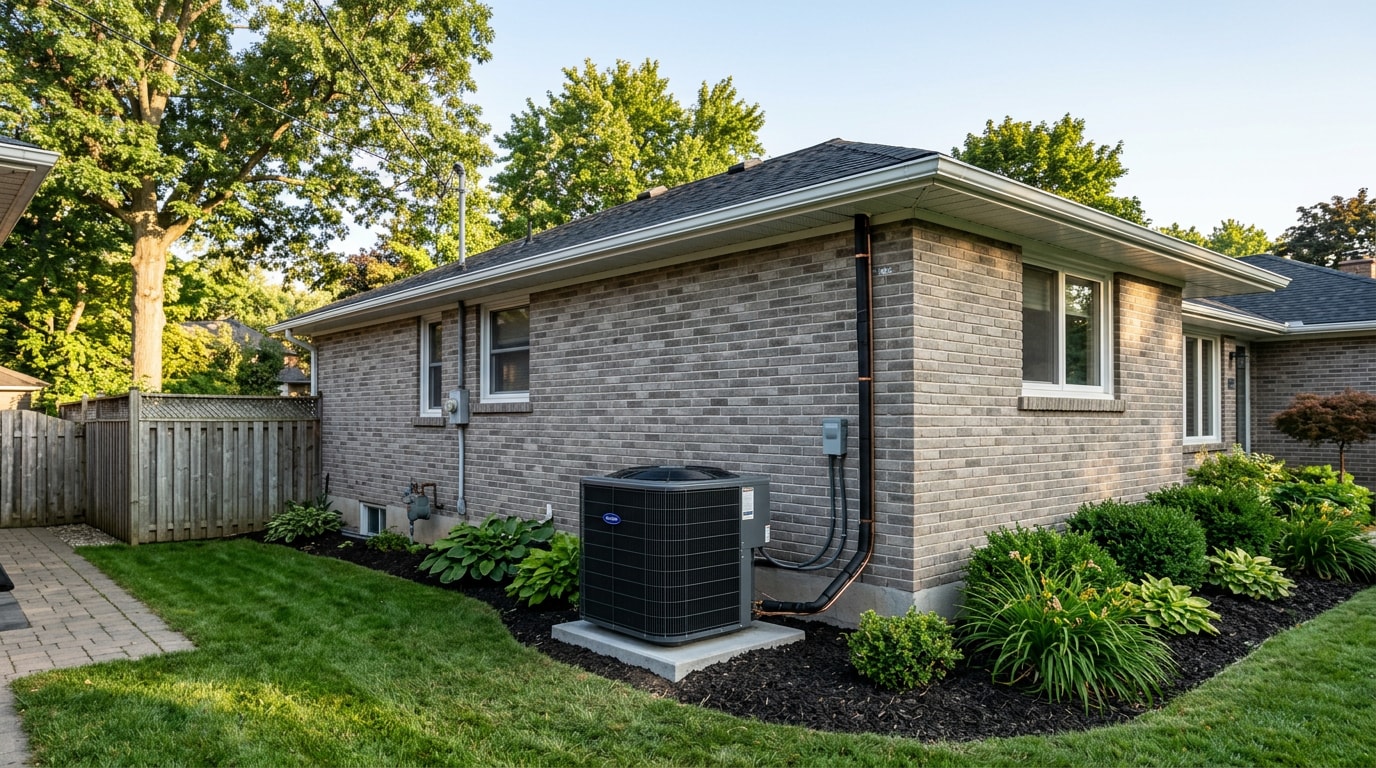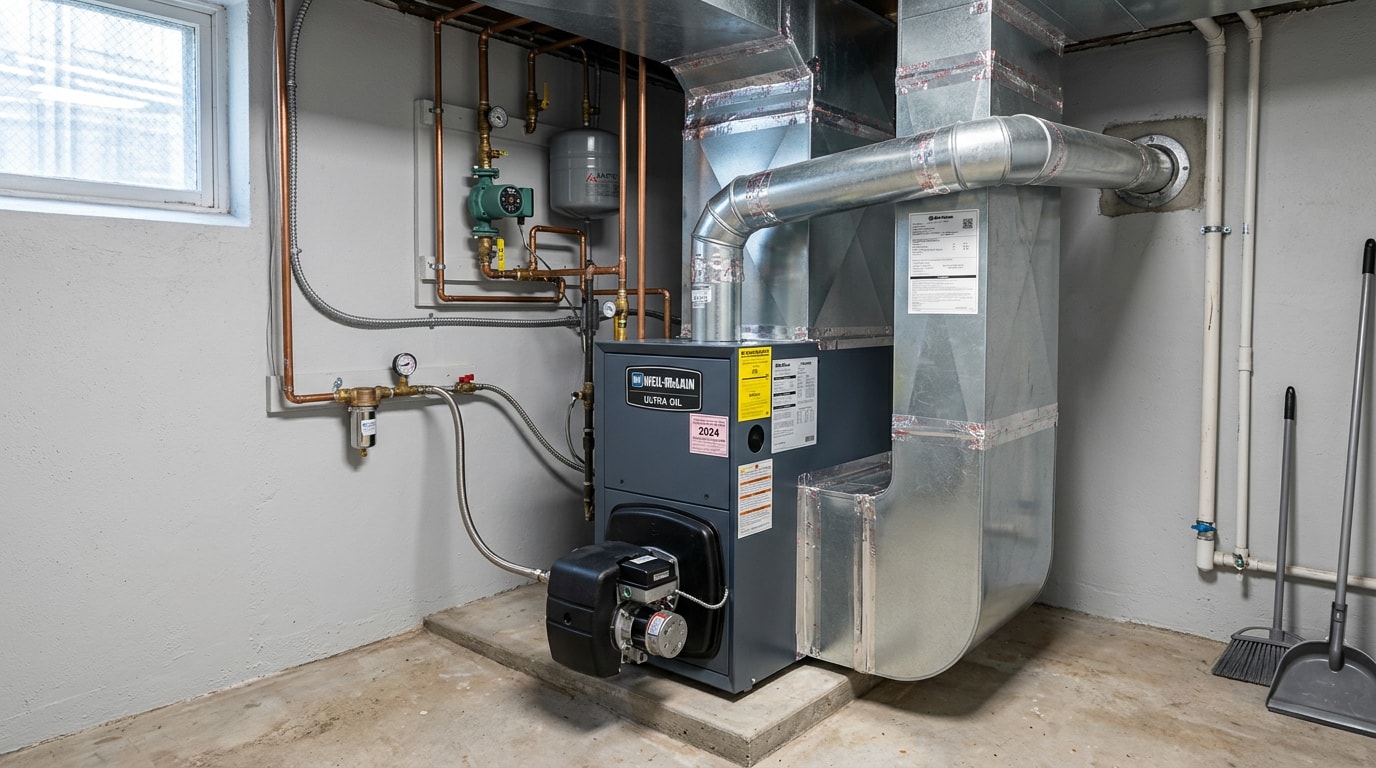
Oil furnace installation in Fountain, CO isn't a job you hand to a crew that only works at sea level. At roughly 5,546 feet, Fountain's thin air changes how a burner draws combustion air, and that affects sizing, safety, and cost before a single duct gets touched. This guide breaks down the real 2026 numbers, the local install steps, and what to ask any contractor before you sign a quote.
Why Oil Furnace Installation Works Differently in Fountain, CO
A furnace rated for sea-level performance doesn't deliver its full BTU output once it's installed a mile above sea level. Thinner air carries less oxygen per cubic foot, so burners need an adjusted fuel input and properly sized combustion air openings to burn clean and avoid carbon monoxide risk. The U.S. Department of Energy's combustion safety code reference outlines exactly why fuel-burning appliances installed above 2,000 feet require this kind of altitude correction.
Fountain also sits lower and slightly warmer than Colorado Springs proper, which means components cycle differently across shoulder seasons than they do a few miles north. A furnace sized without accounting for both the elevation and the local microclimate tends to run inefficiently or short-cycle. That's why an HVAC contractor familiar with Fountain's conditions builds both factors into the sizing before recommending equipment.
HVAC Challenges Specific to Fountain Homes
Two local conditions put extra strain on oil heating equipment in Fountain, and they explain why sizing and maintenance schedules here differ slightly from a standard install.
System Wear and Tear
Fountain's warmer southern exposure means the burner motor, oil pump, and nozzle assembly cycle more often than they would in cooler pockets of the Front Range. That extra cycling accelerates wear, particularly on the blower motor, which pushes air through the system more frequently during temperature swings. Catching these stress points early during a furnace diagnostics and safety inspection matters more here than it does in a milder climate.
Indoor Air Quality
Dust and seasonal allergen load in Fountain can clog a furnace filter faster than in less arid parts of the region. On oil systems, that dust combines with normal soot buildup around the burner assembly, so both filters and combustion components need attention on a tighter schedule than a gas furnace typically requires.
Our Oil Furnace Installation Process
A professional oil furnace installation moves through a predictable sequence. Knowing the steps makes it easier to evaluate competing quotes.
- In-home estimate and Manual J load calculation. A technician measures insulation, window exposure, and layout, not just square footage, to size the unit correctly.
- Altitude and combustion air check. Existing ductwork, venting, and combustion air clearances get verified against Fountain's elevation before equipment is ordered.
- Removal and setup. The old unit comes out, the new furnace, oil lines, and venting go in, and any tank or chimney liner work happens at this stage if it's part of the scope.
- Commissioning. Airflow gets measured, a combustion check confirms proper burner performance, and the technician coordinates any required local inspection.
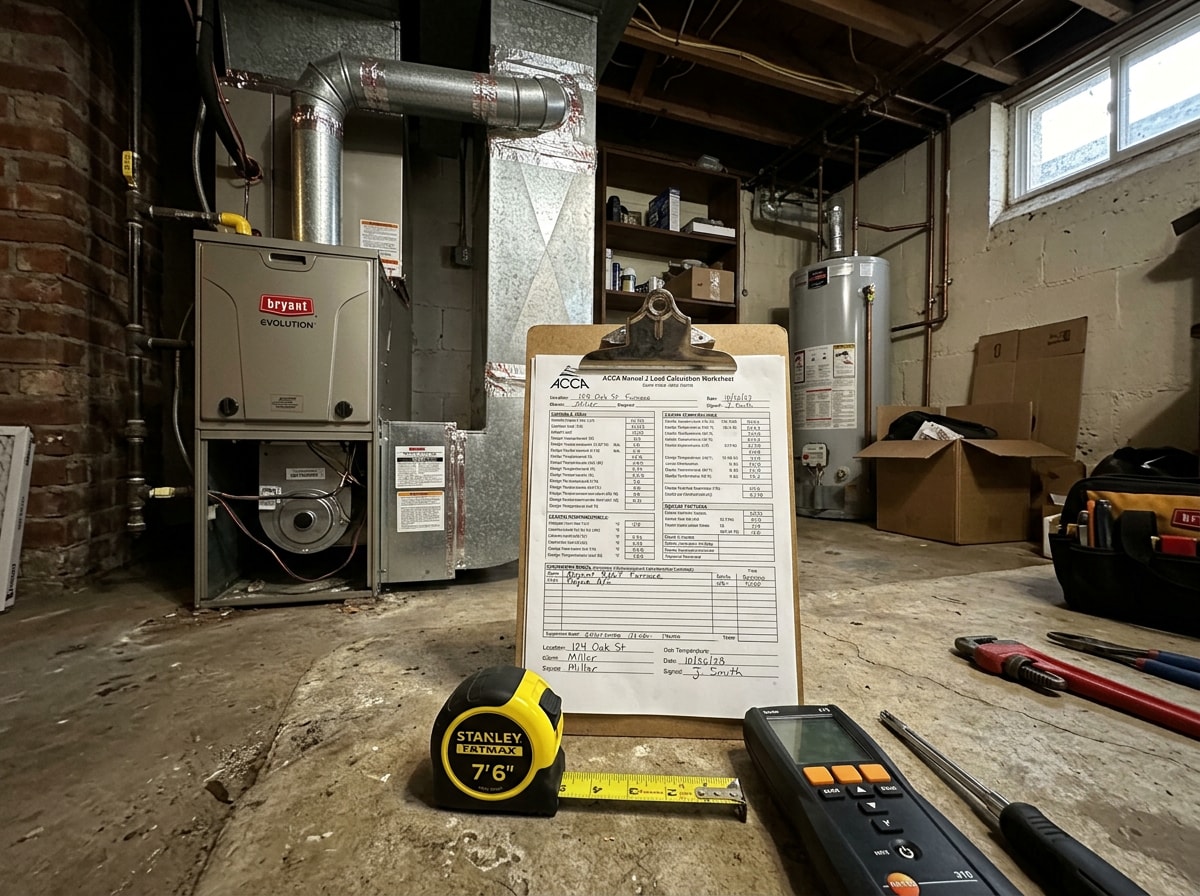
Commissioning & Final Walkthrough
Once the furnace is running, the technician measures temperature rise, runs a combustion analysis, and confirms the unit is firing at its correct, altitude-adjusted rate. The job wraps with a walkthrough covering filter location, thermostat settings, and basic maintenance, so you're not guessing later. If you'd rather lock in a seasonal check instead of waiting for a problem, gas furnace maintenance and tune-up service covers oil-adjacent systems too and catches issues before they become no-heat calls.
How Much Does Oil Furnace Installation Cost in Fountain, CO in 2026?
Cost is usually the deciding factor behind this search, so here's the range. A straightforward oil furnace replacement typically runs $5,500 to $13,500 installed, depending on efficiency tier and site conditions. Carrier's own cost breakdown shows a similar spread nationally, noting that a standard-efficiency oil furnace generally falls between $2,500 and $6,000, while high-efficiency units can run upwards of $10,000 depending on install complexity.
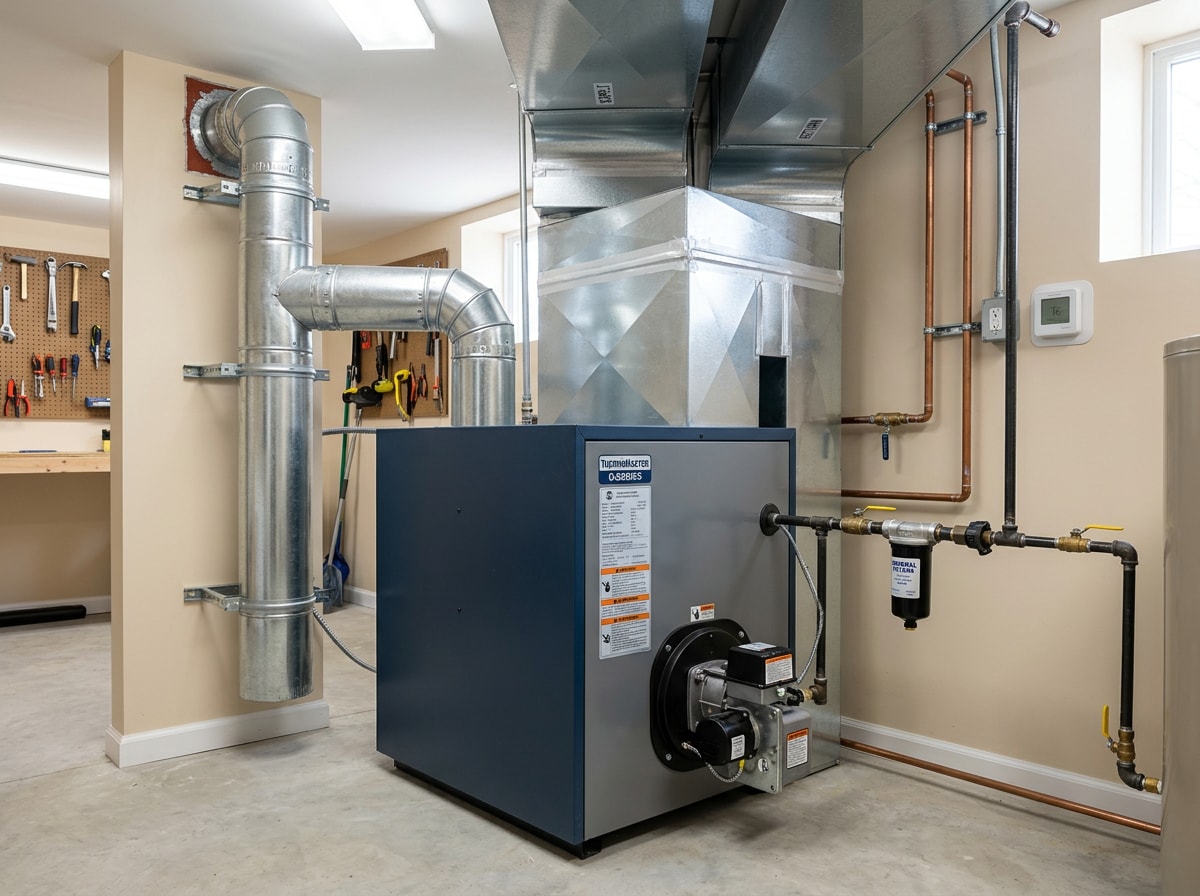
If your project also needs a new oil tank and chimney liner, expect the total to climb well past the base install cost. Oil tank replacement alone commonly adds another $1,600 to $6,200, so a full system overhaul with new venting and storage can realistically approach $18,000 to $21,000 on the high end. A simple swap onto existing infrastructure lands much closer to the lower figures. For a number specific to your home, start with furnace replacement or get a free in-home estimate.
What Drives the Cost of an Oil Furnace Replacement?
Several factors push a quote up or down beyond the sticker price of the equipment:
- Labor. Carrier puts installation labor at $1,000 to $3,000, depending on region and job complexity.
- Efficiency tier. Higher-AFUE units cost more upfront but reduce fuel use over the life of the system.
- Home size and BTU requirement. Bigger homes need more heating capacity and sometimes ductwork modifications to match it.
- Existing ductwork condition. Resizing or sealing leaky ducts adds to the total.
- Tank and chimney scope. New oil tanks and chimney liners are the two line items homeowners most often underestimate.
- Permits and inspection. Requirements vary by jurisdiction and are a routine part of any legitimate installation. Our guide to central heating installation in Fountain, CO covers local permit expectations in more detail.
Oil Furnace Cost by Home Size and BTU
Furnace sizing scales with home square footage, but insulation quality and ceiling height shift the number too. Use this table as a starting point, not a final quote.
| Home Size | Estimated BTU Output | Typical Installed Cost |
|---|---|---|
| 1,000–1,500 sq ft | 40,000–60,000 BTU | $5,500–$8,000 |
| 1,500–2,500 sq ft | 60,000–100,000 BTU | $7,500–$11,000 |
| 2,500–3,500+ sq ft | 100,000–140,000 BTU | $10,000–$13,500 |
A Manual J load calculation during your in-home estimate is what actually locks in the right number for your house.
Oil vs. Gas vs. Heat Pump: What It Costs to Run in 2026
Fuel choice matters as much as equipment choice once you factor in operating cost. The EIA's 2026–27 Winter Fuels Outlook gives the clearest national picture available right now:
| Heating Fuel | Avg. Seasonal Cost (Nov–Mar) | Change vs. Last Winter | Avg. Price |
|---|---|---|---|
| Heating Oil | $2,115 | +21% | $5.26/gallon |
| Natural Gas | $640 | −9% | $13.44/Mcf |
| Propane | $1,246 | −3% | $2.52/gallon |
| Electricity | $1,196 | +4% | $0.1823/kWh |
That gap is driven by tight distillate fuel inventories pushing oil prices up at the same time natural gas supplies stay comfortable. It doesn't automatically mean oil is the wrong choice for every home, since tank infrastructure, conversion cost, and local gas line access all factor into the real math. If the numbers above make you curious about switching fuels, an energy-efficiency system upgrade consultation is a reasonable next step before committing either way.
AFUE Ratings: What's Realistic for an Oil Furnace
Oil furnaces top out lower than modern gas equipment. ENERGY STAR's certification criterion for oil furnaces requires an AFUE of 87% or greater, compared with 95% to 97% for certified gas furnaces. Carrier's current oil furnace lineup tops out around 87.5% AFUE, which reflects where the technology sits industry-wide. Condensing oil furnaces exist in theory, but they're not a mainstream residential option the way condensing gas furnaces are, so don't expect a 96%+ oil unit to show up on a standard quote.
FAQ
Do you provide oil furnace installation in Fountain, CO?
Yes. Oil furnace installation is available throughout Fountain and the surrounding El Paso County area. A contractor familiar with the area's elevation and climate handles sizing and setup accordingly, rather than guessing from square footage alone.
How long does oil furnace installation take?
A licensed crew typically completes the swap in 6 to 12 hours, depending on whether ventilation, ductwork, or the oil tank also need modification during the same visit.
Is it cheaper to repair or replace an oil furnace?
It depends on the furnace's age and the repair cost. If the unit is under 10 years old and the repair is minor, repair is usually the better value. Once a furnace passes 15 years or a repair quote approaches half the cost of a new system, replacement typically wins long term. A furnace repair visit can help you make that call with real numbers instead of a guess.
What AFUE rating should I look for in a new oil furnace?
Look for 85% to 87.5% AFUE, since that's the realistic ceiling for oil equipment on the market today. Anything advertised well above that range for an oil furnace specifically is worth double-checking before you buy.
Is it worth converting an oil furnace to gas?
It depends on upfront conversion cost versus long-term fuel savings. Given the operating-cost gap shown above, natural gas pencils out favorably most winters, but conversion costs, gas line access, and your home's specific setup all need to be run through the numbers before switching.
Do I need a permit to replace an oil furnace in Fountain, CO?
Most furnace replacements in El Paso County require a mechanical permit, and altitude-related combustion documentation is often part of that paperwork. Our guide to central heating installation in Fountain, CO walks through what the local permit process typically involves.
Ready to get a real number for your home instead of a national average? Contact IronRidge Heating for a free in-home estimate, or visit ironridgeheating.com to see our full range of heating services.